
Missing and lifted shingle repair, matched and fixed.
Wind gets under a shingle edge, breaks the seal, and the next storm finishes the job. We reset or replace what's damaged and match it to the roof you already have.
- ★★★★★4.8 on Google
- Licensed & insured
- No obligation
Tap the spot that's giving you trouble.

- 22+ years in business
How it works
- 01InspectionField Inspector climbs the roof and flies a drone for high-res images. Documents wind, hail, moisture, broken shingles, structural damage.
- 02AgreementInitial Agreement signed. We call your insurer with you, get a Claim Number. FL-627.7152 rights baked in.
- 03AdjustmentInsurer issues a Loss Statement. We submit a Supplement for items they missed — code requirements, overlooked materials.
- 04AddendumFinal contract: scope, conditions, warranties, pricing, full materials list, your color choices.
What a repair usually runs
- How far the water got (shingles only, or decking too)
- Where it is: flashing, valley, chimney, skylight
- Roof material and how many storeys
- Whether it is leaking right now
Why a small leak never stays small
Water follows the decking. A flashing or pipe-boot fix caught this month is a few hundred dollars; the same leak left through a season soaks the deck and insulation underneath it, and that becomes a section replacement. If you are seeing a stain, it has already been leaking a while.
Quality Plus Roofing & Solar repairs wind-lifted, creased, and missing shingles for homeowners across Central Florida, including Tampa, Orlando, and the Lakeland area. Wind works under the leading edge of a shingle, breaks its factory seal, and either creases it or tears it off completely. A creased shingle won't reseal on its own, and it leaks the next time it rains. Our crews replace the damaged shingles and ridge cap, matching the surrounding roof, so a small repair doesn't turn into a bigger one.
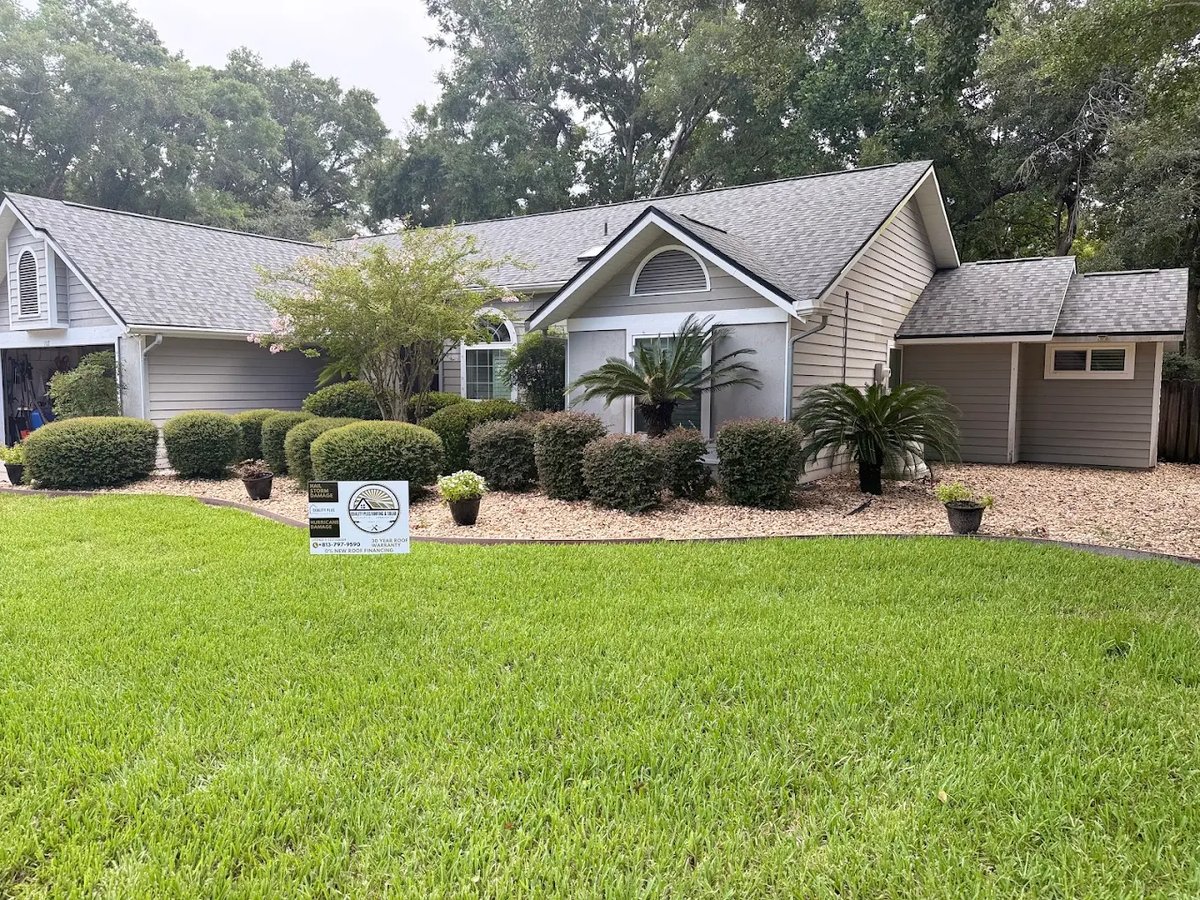
Did a windy afternoon leave shingles curled up, cracked, or missing off your roof?
That's wind damage, and it rarely stays contained to the spots you can see from the ground. Wind gets under the leading edge of a shingle where the seal strip has broken, and once that seal is gone the shingle either creases from repeated flapping or tears off in a stronger gust. A creased shingle won't lie flat again and won't reseal, which means it leaks in the next rain even if it looks intact. The safest move is a full lift-test of the roof surface, not just replacing the shingles you happened to spot missing.
Warning signs to watch for
Shingles you can see curling at the edges
A lifted edge means the seal strip has already broken. Left alone, wind keeps working that spot until the shingle tears loose entirely.
Bald or granule-covered gutters
Torn or creased shingles shed granules fast, and a pile of them in the gutter or downspout is often the first visible sign something's wrong up top.
A crease running across a shingle
Creasing happens when wind flexes a shingle back and forth without tearing it off. It's a repair signal even if the shingle is technically still in place, because a crease never reseals.
Missing or lifted ridge cap pieces
The ridge takes the most wind of any part of the roof. Loose or missing ridge cap shingles expose the ridge vent and the roof edge underneath to water.
What is causing the problem
Broken factory seal strips
Every shingle relies on a heat-activated seal strip to stay flat. Once wind breaks that bond, the shingle is loose for good until it's reset or replaced.
Age-related brittleness
Older shingles lose flexibility and crack or tear more easily in wind that a newer roof would shrug off.
Widespread seal failure across the roof
When lifted shingles show up on more than one slope, it's often a sign the whole roof is reaching the point where patch repairs stop being cost-effective.
Poor original installation
Nailing patterns and seal placement that don't match manufacturer spec leave shingles more vulnerable to wind from day one.
What to expect during the visit
We walk each slope and lift-test the shingles along the edges, ridge, and any area that looks disturbed, since wind damage is often more widespread than what's visible from the driveway. We count every creased, torn, or missing shingle and check the ridge cap separately, since it takes the brunt of the wind. If the damage is scattered across the whole roof rather than a single area, we'll tell you that plainly and explain what it means for a repair versus a replacement. For a straightforward repair, we replace the affected shingles and ridge cap, matched to the surrounding roof as closely as the existing material allows.
Related services you may need
If the lift-test turns up damage spread across most of the roof, Residential Roofing covers a full replacement estimate. If a fallen limb or debris punched through the decking along with the shingles, Emergency Roof Tarping & Repair gets the water stopped first.
The cost of waiting
A handful of lifted shingles doesn't look urgent, but every gust after the first one works the damage wider. What starts as a few loose edges becomes a torn section, then an actual leak once water gets under the exposed underlayment. Ridge cap left unrepaired exposes the roof edge itself, which is one of the harder and more expensive areas to fix once it's compromised. A repair now stays a repair. Left through a few more storms, it tends to grow into a much larger section of roof.
Can you match new shingles to my existing roof?
We do our best to match the existing shingle as closely as the available material allows, since sun exposure changes shingle color over time even within the same product line. On some roofs a small color difference in a repaired section is unavoidable, and we'll tell you that up front before starting.
How much does shingle repair cost in Central Florida?
It depends on how many shingles are affected and whether the ridge cap or underlayment also needs attention. A repair limited to a handful of shingles costs less than one that involves a full ridge section or hidden decking damage, which is why we inspect and explain the scope before quoting.
Is it worth repairing a few shingles or should I replace the whole roof?
That depends on how widespread the damage is and how old the roof already is. If the lifted shingles are isolated to one area and the rest of the roof is sound, a repair makes sense. If the seal failure shows up across multiple slopes, replacement is usually the better long-term move.
If wind left your roof with lifted, creased, or missing shingles, give us a call and we'll get it inspected and repaired. We serve Central Florida homeowners and the surrounding region.
Ready when you are.
Tell us what you are seeing and we will tell you what it usually runs. No pressure, no commitment.
What homeowners say about missing & lifted shingle repair.
“I highly recommend this roofing company — they truly deserve all 5 stars. From start to finish, the service was professional, reliable, and efficient.…”
“The best service in town.”
“The pricing was great and the work impeccable.”
“I would recommend Quality Plus Roofing to anyone. In fact they did my brother's AND sister's roofs.”
“Very professional. In fact, my yard was cleaner when they left than it had been when they got there. Plus very happy with their work.”
“My home is literally cleaner than when they got there!”
“I highly recommend this roofing company — they truly deserve all 5 stars. From start to finish, the service was professional, reliable, and efficient.…”
“The best service in town.”
“The pricing was great and the work impeccable.”
“I would recommend Quality Plus Roofing to anyone. In fact they did my brother's AND sister's roofs.”
“Very professional. In fact, my yard was cleaner when they left than it had been when they got there. Plus very happy with their work.”
“My home is literally cleaner than when they got there!”
“I highly recommend this roofing company — they truly deserve all 5 stars. From start to finish, the service was professional, reliable, and efficient.…”
“The best service in town.”
“The pricing was great and the work impeccable.”
“I would recommend Quality Plus Roofing to anyone. In fact they did my brother's AND sister's roofs.”
“Very professional. In fact, my yard was cleaner when they left than it had been when they got there. Plus very happy with their work.”
“My home is literally cleaner than when they got there!”
“I highly recommend this roofing company — they truly deserve all 5 stars. From start to finish, the service was professional, reliable, and efficient.…”
“The best service in town.”
“The pricing was great and the work impeccable.”
“I would recommend Quality Plus Roofing to anyone. In fact they did my brother's AND sister's roofs.”
“Very professional. In fact, my yard was cleaner when they left than it had been when they got there. Plus very happy with their work.”
“My home is literally cleaner than when they got there!”
- A professional, friendly crew is ready to track down your leak, fix it right, and back the work with a lifetime workmanship warranty, serving Lakeland, FL and every corner of Central Florida.