
What Does a Class 4 Rating Actually Mean for Your Roof?
A Class 4 rating means a shingle passed the highest tier of a standardized impact test, which measures how well a roofing material resists cracking when struck by a hard object. In Florida, where afternoon storms and the occasional hail event are part of living here, the rating shows up often in conversations with insurance agents and material suppliers alike.
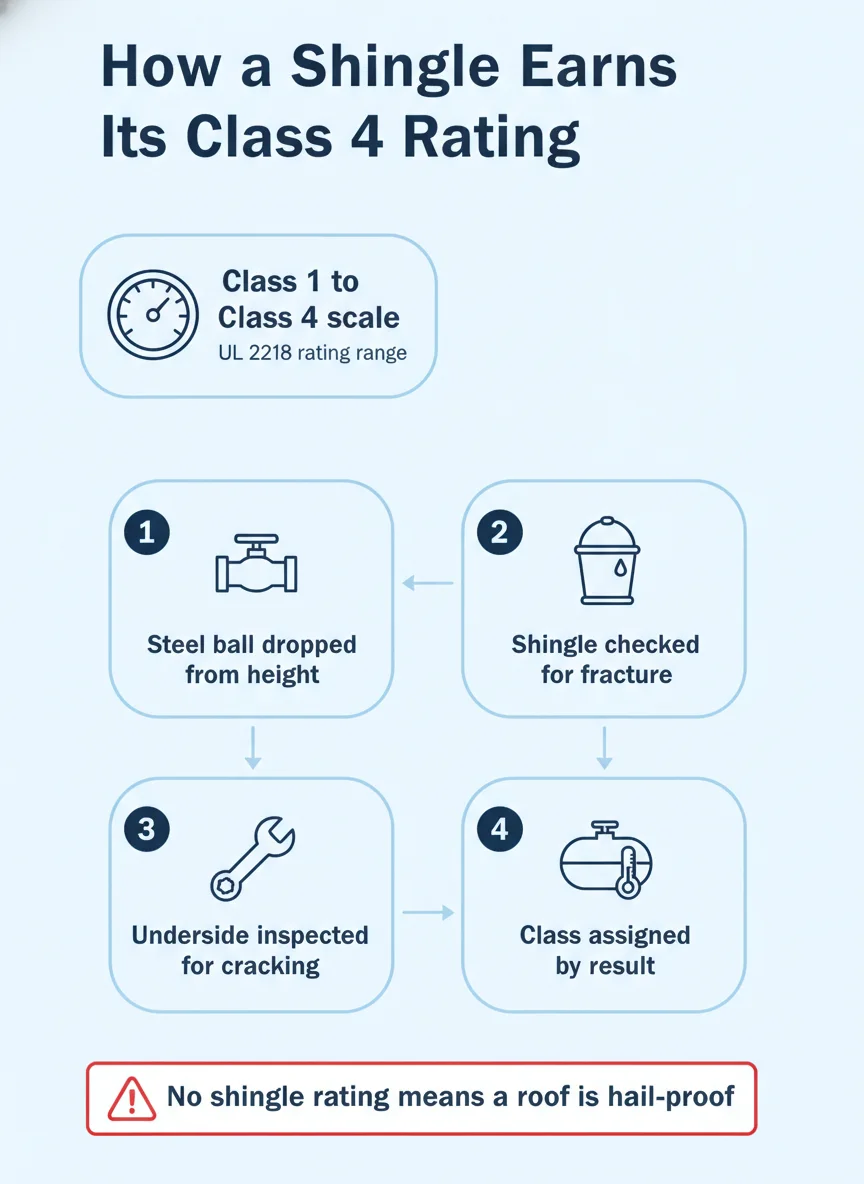
The scale runs from Class 1 to Class 4, with Class 4 representing the toughest tested material. It's a manufacturing classification, not a brand name or a guarantee, and it applies to the shingle product itself rather than the full roofing system. Understanding what the rating tests, and what it leaves out, helps you decide if it matters for your specific property.
Why the UL 2218 Test Exists and What It Measures
The test behind the Class 4 label is UL 2218, an industry standard developed to give homeowners, insurers, and builders a consistent way to compare impact resistance across shingle brands. It doesn't test wind resistance, UV durability, or long-term weathering, it's specifically about resistance to a single hard impact.
The Steel-Ball Drop Test Explained
During testing, a steel ball is dropped from a set height onto a shingle sample, simulating the force of a hard impact. The shingle is then examined on the underside for cracking or splitting. A shingle that resists cracking at the highest drop height earns the Class 4 designation, the top of the four-tier scale.
Lower classes use smaller balls or shorter drop heights, so a Class 1 or Class 2 shingle simply wasn't built to withstand the same force before it was tested. The scale gives a repeatable way to compare materials side by side, which is why it gets referenced so often in underwriting conversations.
What Class 4 Does Not Promise
A Class 4 rating is not a claim that the shingle is hailproof or immune to damage. It's a relative measure of impact resistance under one specific lab condition, and real-world weather doesn't always match a lab test. Granule loss, repeated small impacts, and age still affect any roofing material, Class 4 included.
The rating also says nothing about wind performance, which is a separate consideration in Florida's building code requirements. A homeowner choosing shingles for impact resistance should still confirm the product's wind rating fits the home's exposure, since the two ratings test different things entirely.
| Rating Class | General Impact Resistance | Where You'll Typically See It |
|---|---|---|
| Class 1 | Lowest tested resistance level | Rarely marketed as a standalone feature |
| Class 2 | Moderate resistance | Common on standard architectural lines |
| Class 3 | Above-average resistance | Mid-tier upgraded shingle products |
| Class 4 | Highest tested resistance | Premium impact-rated shingle lines |
How the Rating Shows Up on a Real Roof
Most homeowners never see the testing process itself, they see the rating reflected in three places: the shingle wrapper left over from install, the shingle stamp printed on the back of the material, and the original invoice from whoever installed the roof. Any of the three usually lists the product name, which you can then cross-reference with the manufacturer's published rating.
If a roof was installed as part of a full replacement, the paperwork from that job is often the fastest way to confirm what's up there. For residential roofing projects, the material choice gets documented at the estimate stage, so homeowners who kept that paperwork usually have the answer in a drawer somewhere.
Step-by-step: How to Confirm a Roof Already Has Class 4 Shingles
If you're not sure what's currently installed, there's a straightforward sequence to work through before assuming either way.
- Check the paperwork: Look through closing documents, old invoices, or warranty paperwork for the shingle product name used during the last install.
- Search the product name: Most manufacturers publish the UL rating for each shingle line on their product pages, so a quick search often settles the question.
- Look for leftover wrappers: If any shingle bundles were left in the garage or attic after install, the wrapper usually prints the rating directly on the packaging.
- Inspect the shingle stamp: A roofer can often identify the manufacturer and product line from the visible pattern or stamp on an installed shingle without removing it.
- Call the original installer: If the same company installed the roof, they may have the job file on record with the exact material specified.
- Request a visual assessment: A licensed roofer can walk the roof and compare what's installed against known Class 4 product lines sold in the region.
Is the Class 4 Upgrade Worth It for Your Home?
Whether the upgrade pays off depends on a handful of factors specific to the home, not a blanket yes or no. A homeowner planning to stay in the property long term, in an area with frequent severe weather, weighs the decision differently than someone replacing a roof right before selling.
Insurance and Rate Considerations
Some insurers offer a premium credit for Class 4 roofing materials, though the amount and eligibility rules vary by carrier and policy. It's worth a direct conversation with your insurance agent before committing to the upgrade, since the credit (if offered) factors into whether the material cost makes sense over time.
Insurers also look at other factors beyond the shingle class, including the roof's age, the home's overall condition, and the wind mitigation features already in place. A Class 4 shingle is one piece of that picture, not the whole underwriting decision.
Questions to Ask Before You Pay the Upgrade
Before paying extra for Class 4 materials, ask what specific product line is being quoted and whether its manufacturer rating is documented, not just assumed. Ask how the warranty terms differ, if at all, and whether the installer has experience with that specific product.
It's also reasonable to ask your insurance agent directly whether your specific policy offers a credit for the upgrade, and what documentation they'll need to apply it. Getting that answer before the job starts avoids any surprise about whether the extra cost actually nets a benefit.
DIY vs Calling a Pro
Identifying whether existing shingles carry a Class 4 rating is something a homeowner can often start on their own, since it mostly involves locating paperwork or searching a product name online. If the documentation turns up clearly, that part doesn't require a visit from anyone.
Where it gets harder is confirming the rating purely by looking at an installed roof from the ground, since many shingle lines look similar from a distance and the stamp isn't always visible without getting up close. That's where a licensed roofer earns their keep, walking the surface and checking details a homeowner can't easily see from the yard.
Any decision about whether to upgrade to Class 4 materials during a future replacement should involve a licensed roofer and, ideally, a conversation with your insurance agent. The material choice affects both the install and the paperwork insurers want to see, so getting it right at the estimate stage matters more than trying to retrofit the decision later.
Getting a Straight Answer Before You Decide
A Class 4 rating is a useful data point, not a marketing buzzword, and understanding what it tests makes it easier to have a grounded conversation with both your roofer and your insurer. If you're weighing material options as part of a larger replacement decision, reading through what drives shingle grade differences is a good next step.
Homeowners in Lakeland and across the surrounding area often bring this question up during an estimate, and it's a fair one to ask regardless of which company you're working with. Quality Plus Roofing & Solar can walk through the material options available for your specific roof when you're ready to look into it.
Frequently asked questions
What does Class 4 mean on a shingle?
It means the shingle passed the toughest level of the UL 2218 impact test, which drops a steel ball onto the material and checks for cracking on the underside. It's a measure of impact resistance, not a guarantee against all damage.
Are Class 4 shingles worth the extra cost?
It depends on your insurer, your roof's exposure, and how long you plan to stay in the home. Some insurers offer a premium credit for Class 4 materials, so it's worth asking your agent before you decide.
How do I know if my current roof has Class 4 shingles?
Check the shingle wrapper or the original installation invoice, both usually list the UL rating by name. If neither is available, a roofer can often identify the product line from the shingle's visible pattern and stamp.
Do Class 4 shingles cost more to install?
They typically carry a higher material cost than standard architectural shingles, since the reinforced mat and coating add manufacturing steps. Labor costs for installation are usually similar since the install method doesn't change much.
Does a Class 4 rating mean a shingle can't be damaged by hail?
No, it means the shingle resists cracking better than lower-rated materials in a standardized test, not that it's immune to damage. Large hail, repeated impacts, or granule loss over time can still affect any roofing material.