
Why Replacement Day Looks Different Than You Expect
Homeowners across the Central Florida area usually picture a roof replacement as one loud, messy day and not much else. In reality it's a sequence of distinct stages, each one checked before the next begins, and most of it happens in an order you can predict once you know what to look for.
Knowing the sequence matters because it tells you when to expect noise, when the yard will be covered in debris, and when the crew is working on something you genuinely can't see from the ground, like the condition of the wood underneath the old covering. A homeowner who understands the stages tends to have a calmer day than one who's bracing for a single chaotic event.
What Actually Happens Underneath the Old Layer?
What's happening underneath the old roofing material is the part most homeowners never see, and it's also the part that determines how the rest of the day goes. Once the crew strips off the old covering, they're looking at bare decking, which is the wood layer everything else gets fastened to.
Tear-off and decking exposure
Tear-off is the loudest and messiest part of the day, with crews stripping old shingles, tile, or metal panels down to bare wood and loading debris straight into a driveway dumpster or trailer. This is also when hidden problems surface, since years of small leaks often leave soft spots in the decking that aren't visible until the covering above them is gone.
A crew checks the decking by walking it and pressing on suspect areas by hand. Sections that flex or feel spongy get cut out and replaced with new wood before anything else goes down, because nailing a new roof over compromised decking just buries the same problem for the next owner to find.
Underlayment, drip edge, and flashing
Once the decking passes inspection, the crew installs drip edge along the roof's perimeter, then rolls out underlayment across the entire surface. This layer is the water barrier that protects the home if wind-driven rain ever gets under the top layer of material, and it's required by Florida Building Code on every reroof.
Flashing goes in next around anything that penetrates the roof, chimneys, vent pipes, and wall intersections. These spots account for a large share of leaks on older roofs, so new flashing at every penetration is one of the quieter but more important parts of the day's work.
| Stage | What's Happening | What You'll Notice |
|---|---|---|
| Morning | Dumpster placement, material staging, tear-off begins | Trucks in the driveway, debris landing in the yard |
| Midday | Decking repair, underlayment, drip edge, flashing | Less noise, crew working steadily across the roof |
| Afternoon | Shingle, tile, or metal install, ridge cap | Visible progress, the new roof taking shape |
| End of Day | Cleanup, magnet sweep, final inspection | Yard cleared, crew walking the property with a magnet |
The Ridge, Vents, and Final Touches
The ridge, the highest point where two roof planes meet, gets capped last, after the field material is fully installed and nailed to pattern. Ridge vents or static vents are set into this line to keep attic airflow moving, which matters for both the lifespan of the new covering and the comfort of the rooms below it.
This stage also includes sealing any remaining fasteners, finishing valleys where two slopes meet, and making sure every edge is tight. It's less dramatic than tear-off but it's where a lot of the long-term performance of the roof gets decided.
Step-by-Step: A Typical Replacement Day
Here's the order most Central Florida crews follow on a standard residential roof replacement, weather and material permitting.
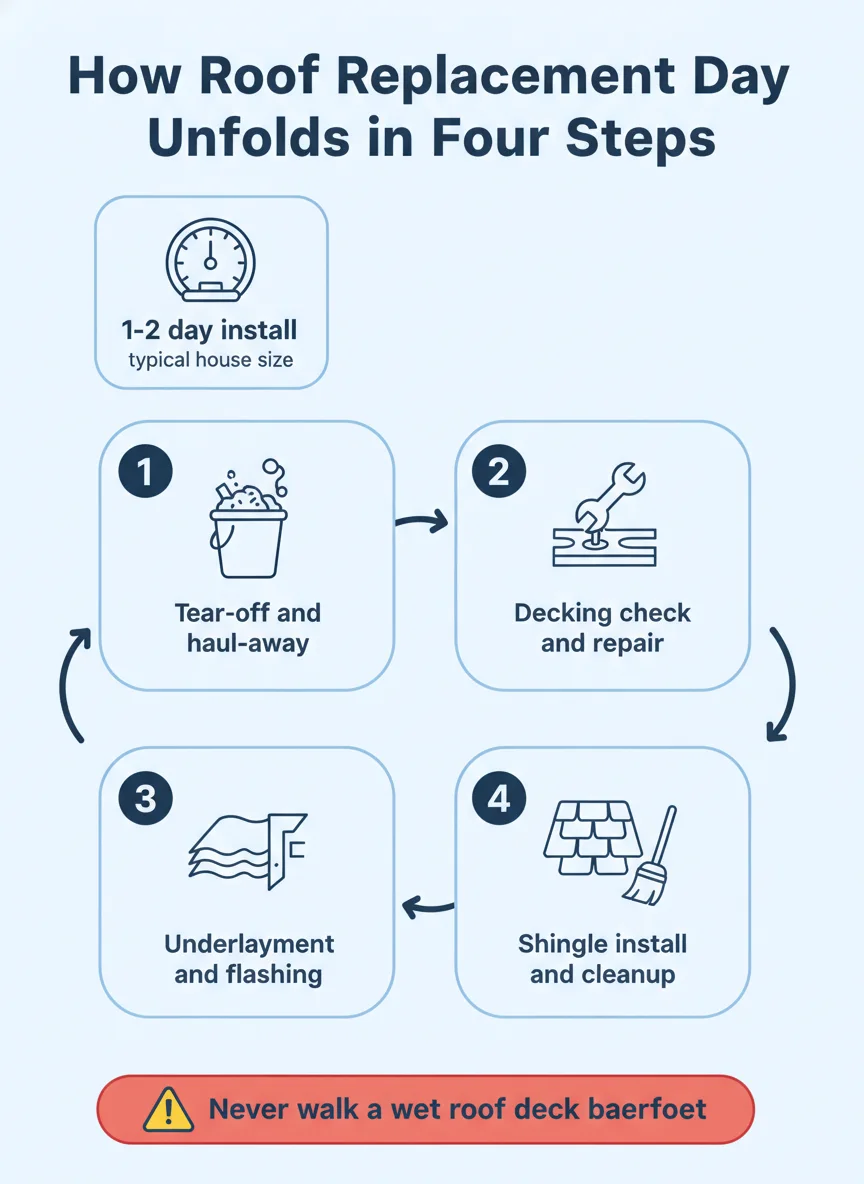
- Setup and staging: The dumpster is dropped, materials are staged on pallets, and the crew reviews the scope before anyone touches the roof.
- Tear-off: Old shingles, tile, or metal come off down to bare decking, with debris loaded continuously into the dumpster.
- Decking inspection: Every section of wood is checked by hand, and any soft or damaged boards are cut out and replaced.
- Underlayment and drip edge: The water barrier goes down first, followed by drip edge along the eaves and rakes.
- Flashing: New flashing is installed around chimneys, vent pipes, and wall intersections to seal every penetration point.
- Field install: The new shingles, tile, or metal panels go on in rows, working from the eave up to the ridge.
- Cleanup and sweep: The yard is cleared of debris and a rolling magnet is run across the property to catch stray nails.
What Should the Final Inspection Catch?
A final inspection should confirm that every fastener is seated correctly, every flashing point is sealed, and the ridge line is straight and properly capped. A thorough walk of the finished roof is the last check before the crew calls the job complete.
Visual checks from the ground and the roof
From the ground, you're looking for straight lines along the ridge and valleys, consistent coloring across the field, and no visible gaps at the edges. From the roof itself, a crew member checks nail patterns, seals exposed fasteners, and confirms vents are seated and caulked where needed.
Any permit-required inspection, where applicable, happens separately from the crew's own quality check and follows your local building department's process.
What the yard should look like when they leave
The yard should be clear of shingle wrappers, old nails, and loose debris before the crew packs up for the day. Flower beds and landscaping near the house tend to take the brunt of falling debris during tear-off, so a careful crew checks those areas specifically during cleanup, not just the open lawn.
If you notice debris left behind in the days after, a reputable company will send someone back to finish the sweep rather than treating the job as closed.
What Can You Do Yourself vs. Leave to a Licensed Crew
Before-day prep is squarely in homeowner territory: moving cars, clearing the driveway, taking down wall decor that vibration could knock loose, and covering pool equipment or patio furniture near the house. Trimming overhanging branches that could interfere with material delivery is also worth doing ahead of time.
The actual tear-off, decking repair, underlayment, flashing, and material installation need a licensed roofing crew. These stages involve fall risk, structural decisions about which decking to replace, and code-required details like drip edge and underlayment that aren't forgiving of guesswork.
After the crew leaves, a homeowner's role is mostly a second walk around the property looking for stray debris, checking gutters for granules or nails, and keeping an eye on the attic for the first few rainstorms. If anything looks off, a quick call back to the company that did the work is the right next step before it becomes a bigger issue.
Knowing the Sequence Takes the Mystery Out of It
Replacement day runs on a predictable order, tear-off, decking check, underlayment and flashing, field material, ridge cap, cleanup, and a final walk. Once you know what's supposed to happen at each stage, the noise and mess in the driveway stop feeling random and start looking like progress.
If you're weighing whether your roof is a repair job or a full replacement candidate, How to Roof a House From Start to Finish walks through the bigger picture, and homeowners in Lakeland and the surrounding area can reach out to Quality Plus Roofing & Solar with questions about what a replacement day would look like on their own home.
Frequently asked questions
How long does it take to replace a roof in Florida?
Most single-family homes in Central Florida take one to two days for a full tear-off and reinstall, depending on size, pitch, and material. Steeper roofs, multiple layers to remove, and tile or metal reinstalls can stretch the timeline longer.
Do I need to be home on roof replacement day?
You don't have to be home, but someone should be reachable by phone in case the crew finds hidden decking damage that changes the scope. Most homeowners go to work and come back to a finished job.
What should I move before the roofers arrive?
Move vehicles out of the driveway, take down anything hanging on exterior walls, and cover patio furniture or grills near the house. Vibration from tear-off can knock loose items off walls and shelves inside, so secure wall art and mirrors too.
Is it normal to find rotten wood during a tear-off?
Yes, finding some soft or stained decking once the old covering comes off is common, especially on older homes or anywhere water has been getting past the surface for years. A reputable crew replaces only the sections that fail a hand-pressure check and shows you what came out.
What is the magnet sweep at the end of the day?
The magnet sweep is a pass around the yard and driveway with a rolling magnet to pick up stray nails before they end up in a tire or a bare foot. It's done after cleanup, right before the crew leaves the property.