Why Material Choice Matters More in Florida
Central Florida homes take a beating that roofs in milder climates never see: intense UV exposure nearly year round, sudden downpours, salt air closer to the coast, and wind events that test every fastener and seam. The material you choose does more than set the look of your house, it determines how long the roof holds up before you're back in the market for a residential roofing replacement.
Homeowners across Lakeland, Tampa, and the wider region are weighing this decision right now, often after a leak, a storm, or simply because the current roof has aged out. The right call depends less on what's trendy and more on your home's roof pitch, your timeline for staying in the house, and how much upfront cost versus long-term durability matters to your budget.
How Each Material Actually Performs Over Time
Every roofing material trades off cost, weight, and lifespan differently, and Florida's climate amplifies those tradeoffs. UV breaks down organic materials faster than in northern states, humidity invites algae and moisture issues, and wind uplift ratings matter more here than almost anywhere else in the country.
Asphalt Shingle
Architectural shingle remains the most common choice for residential roofs because it balances cost, appearance, and performance reasonably well. Quality shingle products installed correctly, with proper ventilation and underlayment, hold up for a solid stretch of years even under Florida sun, though they typically age faster here than in cooler, drier climates.
Shingle roofs also offer the widest range of colors and styles, which matters if you're trying to match a neighborhood's look or a homeowners association requirement. They're generally the most budget-friendly option upfront, which is a big reason they remain the default pick for most residential replacements.
Metal and Tile
Metal roofing sheds heat and water efficiently and tends to outlast shingle by a wide margin when installed correctly, making it a strong fit for homeowners planning to stay in a house for decades. It also typically performs well in wind events, which matters in a state where every roof eventually faces a serious storm.
Tile, whether clay or concrete, brings a different kind of durability along with a distinct architectural look common across Florida. It's heavier than shingle or metal, which means the roof structure needs to support that weight, but a well-installed tile roof can last for decades with the underlayment beneath it being the part that eventually needs attention.
| Material | Typical Lifespan | Best Fit For |
|---|---|---|
| Architectural shingle | Shorter end of the range, lower upfront cost | Budget-conscious homeowners, standard pitched roofs |
| Metal | Longer lifespan, higher upfront cost | Long-term homeowners, high wind exposure areas |
| Clay or concrete tile | Long lifespan, heaviest material | Homes built to support tile weight, Spanish or Mediterranean style homes |
| TPO membrane | Moderate lifespan, needs low slope | Flat or low-slope sections, additions, commercial roofs |
What's Actually Under the Material
The visible material is only half the story. Underlayment, flashing, and ventilation do as much work keeping water out as the shingle, metal, or tile on top, and a weak underlayment can shorten the life of an otherwise great material choice. This is part of why two roofs with the same material can perform very differently depending on who installed them.
Deck condition matters just as much. If the plywood underneath has soft spots or moisture damage, no amount of premium material on top will fix the underlying problem, which is why a thorough tear-off and deck inspection matters more than the brand name on the shingle wrapper.
Step-by-Step: How to Choose the Right Material for Your Home
Working through these steps in order helps narrow the decision before you ever get a quote.
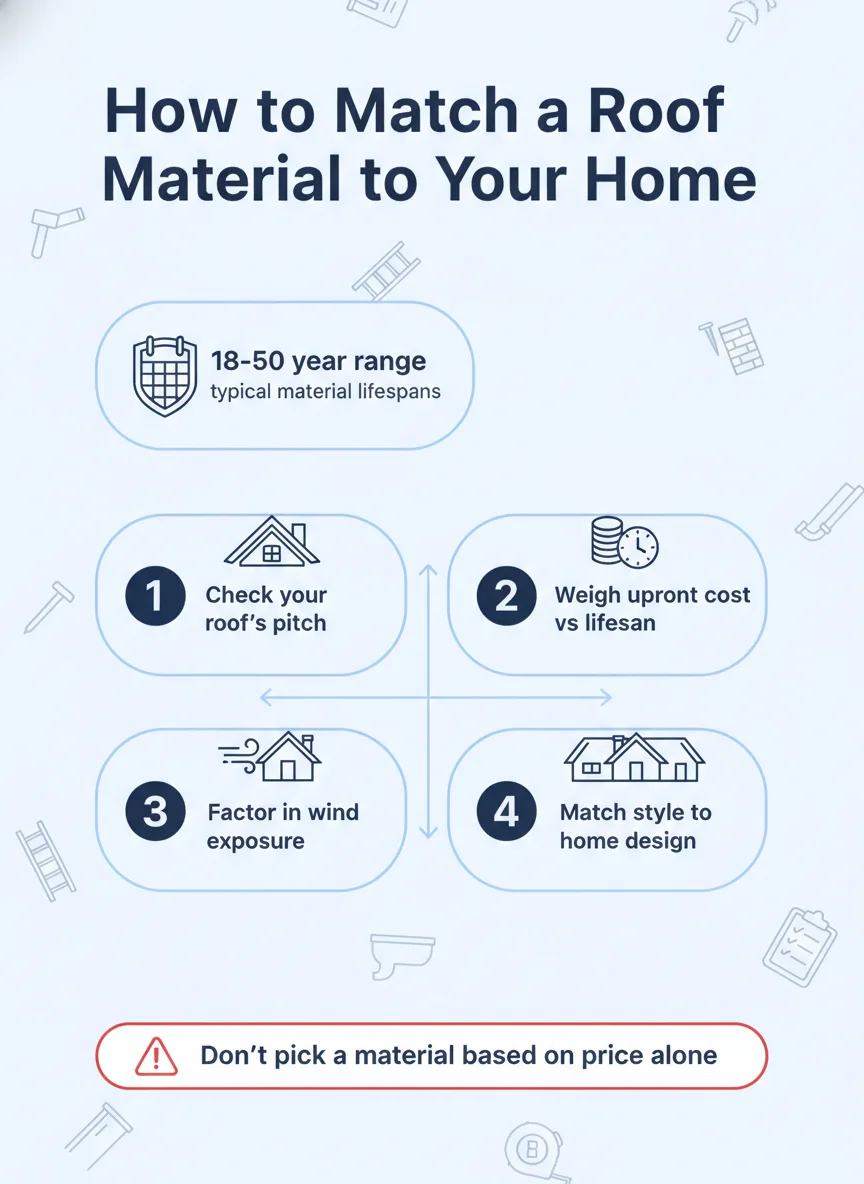
- Check your roof pitch: Steep pitches support shingle, metal, and tile, while low-slope sections generally need a membrane system instead.
- Estimate how long you'll stay: A longer timeline in the house favors materials with a longer lifespan even at a higher upfront cost.
- Factor in wind exposure: Homes closer to the coast or in open areas benefit from materials with strong wind performance.
- Confirm structural support: Heavier materials like tile need the roof structure to be rated for that added weight.
- Match your home's style: Architectural style often points toward a natural material fit, like tile on Mediterranean-style homes.
- Ask about warranty terms: Compare what's covered on materials versus workmanship so you know what protection you're actually getting.
- Get a written estimate: A detailed quote should break out material, labor, and any deck repair separately so you can compare apples to apples.
What to Look for Once the New Roof Is On
A properly installed roof should look uniform across the entire surface, with no visible gaps at valleys, flashing points, or ridge lines. Walk the perimeter from the ground and check that vents, pipe boots, and flashing all sit flush and sealed.
Signs a Material Choice Was Wrong for the Home
Excessive granule loss within the first few years, curling shingle edges, or visible sagging in a tile roof can all signal the wrong material was used for that roof's pitch or exposure. These issues tend to show up faster in Florida's climate than in milder regions, so catching them early matters.
If you're noticing problems with a current roof and aren't sure whether it's a material issue or an installation issue, a roof repair inspection can usually tell the difference. Sometimes the material is fine and the flashing or underlayment is the actual culprit.
Signs the Material Is Performing as Expected
A roof performing well shows consistent color across the surface, tight seams at metal panel joints, and no cracked or slipping tiles. Algae streaking on shingle is common in humid climates and isn't necessarily a sign of failure on its own, just something worth monitoring over time.
Comparing material choices against what's better between metal or shingles can help you see how the two most common options stack up head to head if you're still deciding between them.
What a Homeowner Can Decide vs. What Needs a Licensed Roofer
Homeowners can absolutely narrow down style preferences, research material options, and set a budget range before ever calling a contractor. Understanding the tradeoffs between shingle, metal, and tile ahead of time makes the conversation with a roofer far more productive.
What a homeowner generally can't assess alone is whether the existing roof structure can support a heavier material, whether the current deck needs repair, or how local wind exposure should factor into the decision. Those calls require someone who can get on the roof and evaluate the actual conditions.
A licensed roofer should also be the one pulling any required permits and confirming the installation meets current building code requirements for the material chosen, since those requirements vary by material and by roof pitch. That's not a step worth skipping to save time.
Making the Final Call
There's no single best material for every Florida home, there's only the best material for your specific roof, budget, and timeline. Shingle, metal, and tile each solve for different priorities, and the right answer usually comes down to how long you plan to own the house and how much upfront cost you're comfortable with.
If you want a second opinion on which material fits your home, Quality Plus Roofing & Solar can walk the options with you and explain what each one means for your specific roof.
Frequently asked questions
What roofing material lasts the longest in Florida's climate?
Metal and tile generally outlast asphalt shingle under Florida sun and humidity, often by a decade or more. Shingle still performs well with proper ventilation and quality materials, it just typically needs replacement sooner than metal or tile.
Is metal roofing worth the higher upfront cost?
For many homeowners planning to stay put long-term, yes, because the lifespan and wind performance offset the higher install cost over time. If you're moving in a few years, a quality architectural shingle roof may make more financial sense.
Can I put a metal roof over an existing shingle roof?
In most cases a full tear-off is recommended rather than roofing over, since it lets the installer check the deck underneath and avoid trapping moisture between layers. A licensed roofer can tell you whether your specific roof is a candidate for either approach.
Does roofing material affect my homeowners insurance rate?
Yes, impact-rated and wind-rated materials can influence premiums since insurers weigh a roof's wind and hail performance in Florida. Ask your insurance agent how a specific material or rating affects your policy before you decide.
Which roofing material is best for a low-slope roof?
Low-slope and flat sections typically call for a membrane system like TPO rather than shingle or tile, which need enough pitch to shed water properly. A roofer can evaluate your home's pitch and recommend the right material for each section.