Why This Question Comes Up So Often in Central Florida
Homeowners across Lakeland, Tampa, and the rest of Central Florida eventually land on the same fork in the road: stick with asphalt shingles or make the jump to metal. Both materials show up on homes throughout the region, and both can hold up under Florida's sun, humidity, and wind if they're installed right. The decision usually comes down to how long you plan to stay in the house, what you can spend now versus later, and how much you want to think about your roof once it's on.
This isn't a question with one right answer for every house. A starter home you'll sell in five years has different math than a forever home you want to stop thinking about. Pitch, attic ventilation, HOA rules, and even the color of your neighborhood's rooflines can tip the scale. Understanding how each material actually performs, rather than going on reputation alone, is the fastest way to land on the right one for your situation.
What Actually Separates Metal From Shingles
The difference isn't just looks. Metal and asphalt shingles are built from different materials with different failure points, different install requirements, and different cost curves over a 20-plus year span. Here's how the two break down on the factors that matter most to a homeowner, not a showroom.
Lifespan and Durability
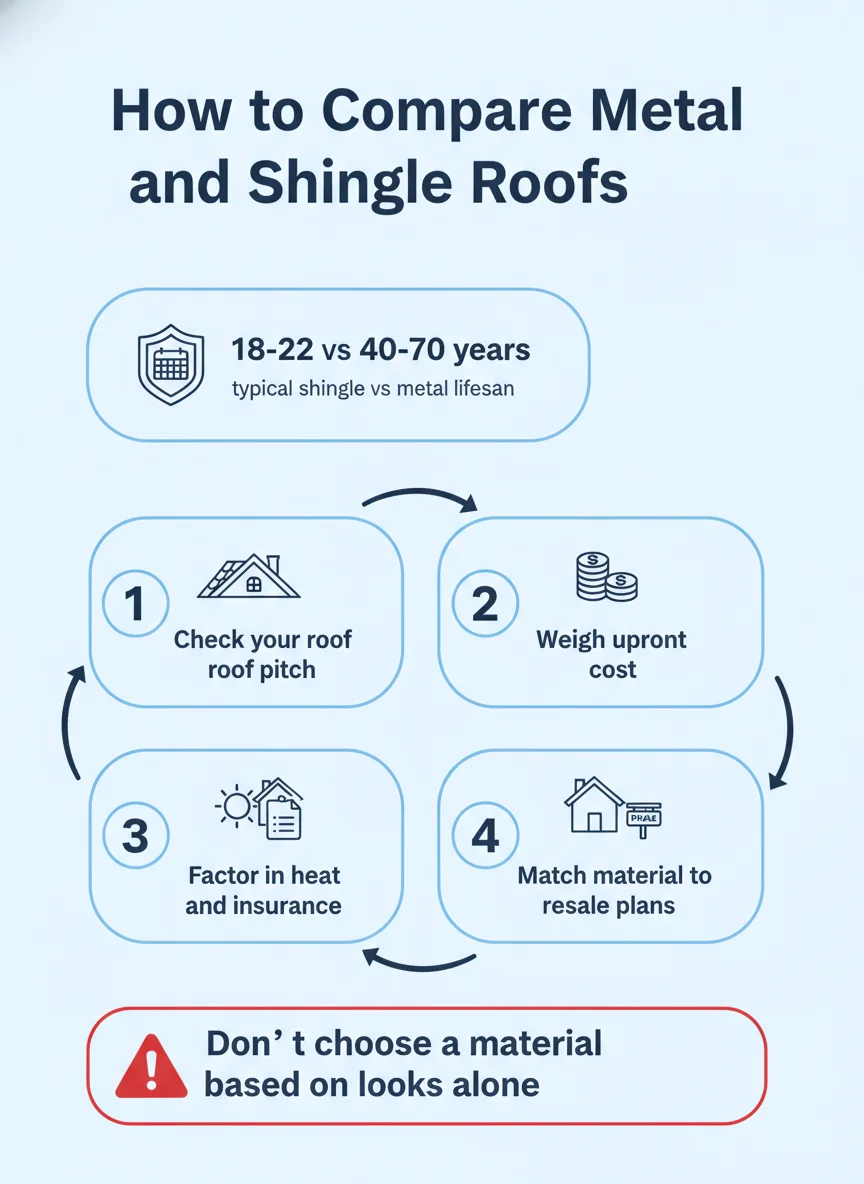
Asphalt shingles, the architectural style most common on Florida homes, typically run 18 to 22 years in this climate before UV exposure and heat cycling start breaking down the granules and seal strips. Metal roofing, whether standing seam or screw-down panel, commonly reaches 40 to 70 years because the material itself doesn't rely on granules or asphalt that degrade under sun.
Wind performance follows a similar pattern. Both materials can be installed to meet Florida Building Code wind requirements, but metal panels interlock or are mechanically fastened in a way that generally resists uplift better once properly installed. Shingles rely on adhesive sealant strips that can weaken over time, especially on older roofs nearing the end of their service life.
Upfront Cost and Long-Term Value
Shingles cost less to install than metal, which is why they remain the most common residential roofing material in Florida. For homeowners budgeting a single project or planning to sell within a decade, that lower upfront number often makes the most sense.
Metal flips that math over a longer horizon. Because it lasts roughly two to three times as long as shingles, the cost per year of service can end up comparable or lower, even with the higher install price. The right choice often comes down to whether you're optimizing for today's budget or the total cost over the time you'll own the home.
| Factor | Asphalt Shingles | Metal Roofing |
|---|---|---|
| Typical Florida lifespan | 18-22 years | 40-70 years |
| Upfront installed cost | Lower | Higher |
| Heat reflectivity | Moderate, darker colors absorb more heat | Higher with reflective coatings |
| Maintenance needs | Periodic inspection, moss and algae checks | Periodic fastener and seam checks |
How Each Material Handles Florida Heat
Florida attics can get brutally hot in summer, and roofing material plays a real role in how much of that heat transfers into the living space below. Metal roofing, especially with a reflective finish, bounces more solar radiant heat away from the structure compared to darker asphalt shingles, which absorb heat and re-radiate it into the attic over the course of the day.
That said, attic ventilation and insulation usually matter more than roofing material alone when it comes to indoor comfort and energy bills. A well-ventilated attic under shingles can outperform a poorly ventilated attic under metal. If energy efficiency is the deciding factor, material choice should be paired with a look at your attic's airflow, not treated as a standalone fix.
Step-by-Step: How to Decide Which Roof Fits Your Home
Working through a short checklist before you commit to either material helps you avoid a decision based on price alone or curb appeal alone.
- Check your roof pitch: Steeper roofs show off standing seam metal more dramatically, while low-slope sections may call for other material options depending on the structure.
- Map your ownership timeline: If you're selling within a few years, shingles often make more financial sense; if this is a long-term home, metal's longer lifespan starts paying off.
- Review your HOA guidelines: Some Florida HOAs restrict roofing colors or materials, so confirm what's allowed before you fall in love with a look.
- Talk to your insurance provider: Ask how your specific policy treats wind and fire resistance for each material, since this varies by carrier.
- Factor in solar plans: If solar is on your radar, metal's clamp-mount compatibility can simplify a future install compared to penetrating a shingle deck.
- Get a roof-specific quote: Have a licensed roof repair and residential roofing team walk your actual roof and quote both materials so you're comparing real numbers, not averages.
What You'll Notice After the Install
Living Under a Metal Roof
Once installed over solid decking with proper underlayment, a metal roof is quieter than its reputation suggests and noticeably cooler to the touch in attic spaces during peak summer. Homeowners often report the biggest difference isn't daily life, it's not having to think about the roof again for decades.
The tradeoff shows up at install time: metal roofing takes more specialized labor and a longer project timeline than a shingle tear-off and replace. It's a bigger upfront commitment in both cost and scheduling, which is why it's worth confirming contractor experience with metal systems specifically, not just general roofing.
Living Under a Shingle Roof
Shingle roofs remain the most familiar option for a reason. They're widely available in a range of colors and styles, install faster, and cost less to repair in spots since replacing a section of shingles is typically simpler than patching a metal panel system.
The tradeoff is a shorter clock. Florida sun is hard on asphalt, and most shingle roofs need closer monitoring as they approach their second decade, watching for granule loss, curling edges, and weakening seal strips that signal it's getting closer to replacement time.
DIY vs. Calling a Licensed Roofer
This isn't a project a homeowner should take on solo, and that's true for either material. Both metal and shingle installs involve code-required fastening patterns, flashing details around penetrations, and underlayment choices that directly affect how the roof performs in Florida wind and rain.
Where a homeowner can genuinely contribute is in the decision-making stage: walking the attic to check ventilation, pulling up past energy bills to weigh heat performance, and getting a clear answer from your insurance company on how each material affects your policy before signing a contract.
The installation itself needs a licensed, insured roofing contractor regardless of which material you choose. Incorrect fastening on a metal roof or a poorly sealed shingle course can both lead to leaks that are expensive to trace and fix later. A reputable quote process should walk your actual roof, not estimate from a satellite photo alone, and explain the tradeoffs in plain terms rather than pushing one material over the other.
Making the Call for Your Home
There's no universal winner between metal and shingles, only a better fit for your specific home, budget, and timeline. Homeowners planning to stay put for decades often lean metal for the lifespan payoff, while those focused on near-term cost or a quicker turnaround tend to stick with shingles, and both are reasonable, well-supported choices when installed correctly. If you're weighing a new construction project or comparing material options for homes in Tampa, it's worth reading how three-tab, architectural, and designer shingles differ before you compare them against metal.
Whichever direction you lean, get a side-by-side quote on your actual roof before deciding. Quality Plus Roofing & Solar walks homeowners through both options honestly so the choice fits the house, not just the sales pitch.
Frequently asked questions
Is a metal roof better than shingles in Florida?
Metal roofing generally lasts longer and handles Florida heat and wind better than asphalt shingles, but it costs more upfront. Which one is 'better' depends on how long you plan to own the home and what your budget allows today versus over the life of the roof.
Do metal roofs really last twice as long as shingles?
In general industry terms, yes. Architectural asphalt shingles in Florida's UV and humidity typically run 18-22 years, while metal roofing systems commonly reach 40 to 70 years with proper installation and maintenance.
Are metal roofs noisier in the rain than shingles?
Not when installed correctly over solid decking and underlayment. The noise myth comes from older open-frame metal buildings; a residential metal roof installed over a plywood deck sounds similar to a shingle roof during rain.
Can you put solar panels on a metal roof?
Yes, metal roofing is one of the more solar-friendly surfaces because standing seam panels allow clamp-based mounting without penetrating the roof. Shingle roofs can also support solar, just with a different mounting approach.
Does a metal roof lower home insurance costs?
Many insurers offer some consideration for metal roofing because of its wind and fire resistance, but the exact effect varies by carrier and policy. Check with your insurance provider for how your specific policy treats roofing material.