
Is Roofing Over Existing Shingles Common in Central Florida?
Roofing over existing shingles means installing a fresh layer of material directly on top of what's already up there instead of stripping the roof down to the decking first. It shows up as an option mostly on older homes across central Florida where the current shingles are worn but the underlying structure still seems fine, and the homeowner is trying to avoid the cost and mess of a full tear-off.
It's worth understanding the tradeoffs before you ask a roofer to quote it, because a roof-over isn't always available and isn't always the smart move even when it is allowed. Florida's heat, humidity, and wind exposure make what's happening under the shingles just as important as what's visible on top.
Why Does a Roof-Over Work in Some Cases and Not Others?
A roof-over only works when the roof has enough structural margin to take on extra weight and when the surface underneath is flat enough for new shingles to lay correctly. Two things decide whether that's possible: how many layers are already up there, and what kind of shape the decking and old shingles are in.
The Single-Layer Rule
Most building codes cap a roof at two total layers of shingles before a tear-off becomes mandatory. If your home already had one re-roof over the original layer, you're at the limit, and any further work legally requires stripping everything down to bare decking.
This rule exists because each added layer increases weight and reduces how well the new shingles can seal and lay flat. A roofer checking your home for a roof-over will start here, since it's the fastest way to rule the option in or out before anything else gets evaluated.
Weight and Heat Buildup
Every layer of shingles adds real weight to the structure, and in Florida that weight sits on a frame that's also carrying wind-load and uplift requirements. A roof already near its design limit isn't a good candidate for stacking on more material, even if the layer count technically allows it.
A second layer also traps more heat in the attic space, since there's an extra buffer between the shingles and the ventilation path below. On a hot Florida roof that heat has to go somewhere, and a roof-over can push attic temperatures higher than a single, properly ventilated layer would.
| Factor | Roof-Over | Tear-Off |
|---|---|---|
| Decking inspection | Not possible, stays hidden | Fully exposed and checked |
| Layer limit | Only works at one existing layer | Resets the layer count to zero |
| Attic heat | Runs warmer, extra insulation effect | Matches standard ventilation design |
| Material warranty | Often excluded by manufacturer terms | Typically eligible for full coverage |
What Does a Roof-Over Hide Underneath the New Shingles?
The decking is the plywood or OSB layer that the shingles are nailed to, and it's the part of the roof that actually holds everything together. A roof-over leaves that decking completely covered, which means any soft spots, rot, or old leak damage stay exactly where they are instead of getting fixed.
That's the core tradeoff with a roof-over. You get a quicker install, but you're betting that the decking underneath is in good shape without ever actually looking at it. On a roof old enough to need replacing, that's not always a safe bet, especially around valleys and penetrations where water tends to find a way in first.
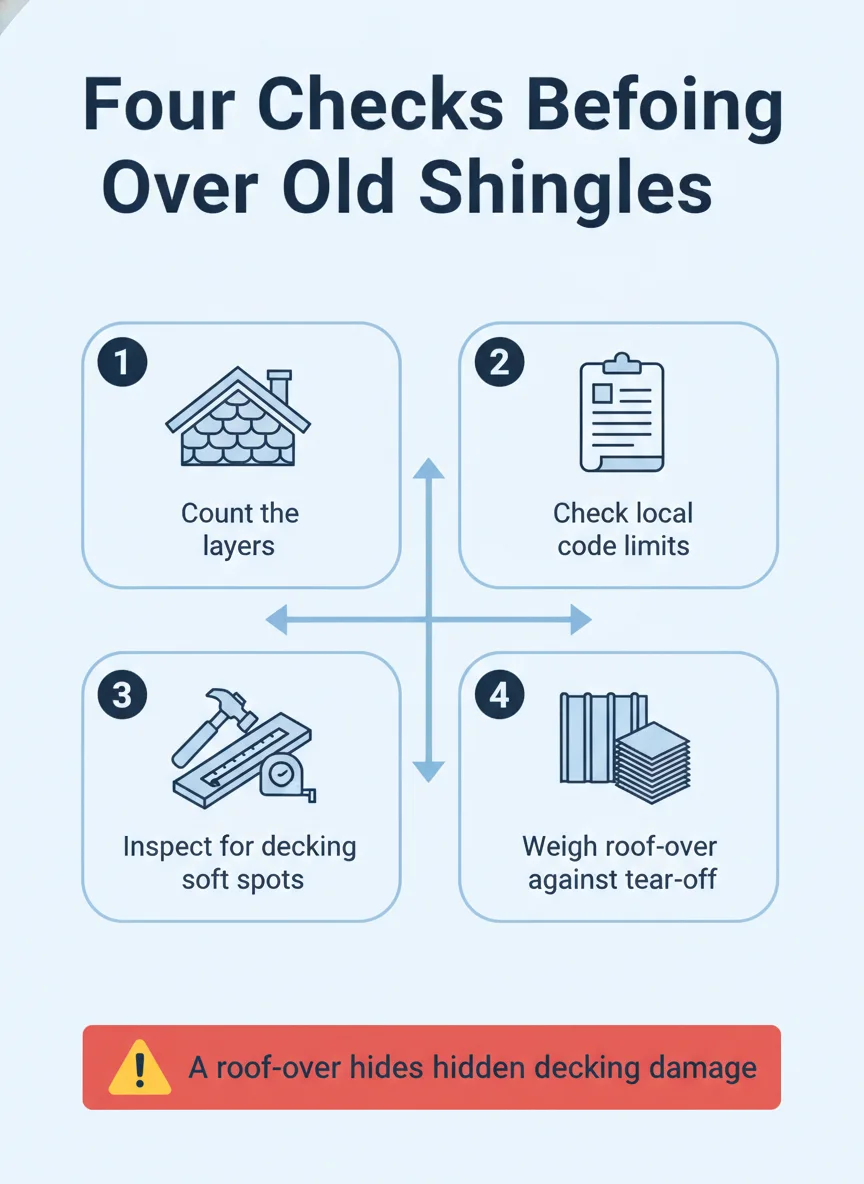
Step-by-step: How a Roofer Evaluates Your Roof for a Roof-Over
A roofer walking a home for this decision moves through a short checklist before giving an answer either way. Here's roughly how that evaluation goes.
- Count existing layers: The roofer checks the roof edge and penetrations to confirm how many layers of shingles are already installed.
- Check local code limits: Local building code determines the maximum layer count allowed before a tear-off is required by law.
- Walk the surface for unevenness: Soft spots, waves, or curling in the existing shingles usually mean the decking underneath has already started to fail.
- Review the roof's age: A roof nearing the end of its expected service life is a weaker candidate for a roof-over, since the decking has had more years to take on moisture.
- Check for past leak history: Known leak spots or water stains on the ceiling below are flagged as areas that need direct decking access, not a cover-up layer.
- Weigh the tradeoffs with the homeowner: The roofer lays out the roof-over and tear-off options side by side so the homeowner can decide with the full picture in hand.
What Shows Up When the Old Layer Finally Comes Off?
Soft or Rotted Decking
Decking that's been sitting under one or two layers of aging shingles for years often shows soft spots once it's exposed, especially near valleys, skylights, and chimney flashing where water collects. These sections flex underfoot and need to be replaced before any new shingles go down.
This is the exact damage a roof-over would have left in place. Finding it during a tear-off means it gets fixed as part of the job instead of quietly spreading under a fresh layer of shingles that looks fine from the ground.
Trapped Moisture Under Old Felt
Underlayment felt that's been buried under a second layer of shingles for years can trap moisture against the decking long after the surface shingles look dry. Pulling it back often reveals dark staining or a musty smell that wasn't visible from the attic side.
That trapped moisture is slow and steady in how it works on wood decking, which is why it's easy to miss until a tear-off exposes it directly. Catching it early keeps a small repair from turning into a bigger structural fix down the road.
Should You Do This Yourself or Call a Licensed Roofer?
This isn't a project for a confident DIYer. Correctly evaluating layer count against local code, checking decking condition without tearing into it, and matching the new shingle profile to the old one all require training and tools most homeowners don't have on hand.
A homeowner can reasonably handle the early groundwork: pulling up permit history for the home, noting any ceiling stains or past leak repairs, and getting a rough sense of the roof's age from paperwork or past service records. That information helps a roofer move faster once they're on site.
Everything past that, pulling permits, confirming layer count against code, and making the final call on roof-over versus tear-off, belongs to a licensed roofer. Roof repair and full residential roofing crews are set up to check decking condition directly rather than guess at what's hidden underneath.
Weighing the Roof-Over Option for Your Home
A roof-over can be a reasonable option when a home has a single existing layer, sound decking, and a roof that's not already near the end of its service life. Outside of those conditions, a tear-off is almost always the safer long-term choice, even if it costs more upfront. If you want more on how to tell a roof's age before making this call, see how to find out how old your roof is.
Homeowners anywhere from Tampa to Lakeland run into this decision most often on homes that already had one re-roof years back. Quality Plus Roofing & Solar can walk the roof, check the layer count and decking condition directly, and lay out whether a roof-over or tear-off makes more sense for the home.
Frequently asked questions
Can you put new shingles over old shingles?
In many areas, yes, but only if there's a single existing layer and the decking underneath is sound. Most building codes cap roofs at two layers total, and once you're at that limit, a full tear-off becomes the only legal option.
Is roofing over shingles a bad idea?
It's not automatically a bad idea, but it does trade a lower upfront job for some real downsides. You lose the chance to inspect the decking, the roof runs hotter, and some shingle warranties won't apply to a roof-over install.
How many layers of shingles can a roof have?
Most residential codes allow a maximum of two layers before a tear-off is required. A home that already has one layer can sometimes get a second layer added, but a home at two layers needs the old material stripped first.
Does roofing over shingles save money?
It generally lowers labor and disposal costs since there's no tear-off step, but it can cost more over time if hidden decking damage goes unaddressed. A licensed roofer can look at the current layer and tell you whether a roof-over is realistic for your situation.
How do I know if my roof already has two layers?
The easiest way is to look at the roof edge or a vent penetration, where you can sometimes see the layer count directly, or have a roofer check during an on-site visit. Permit records for the home can also show when the last full replacement happened.