
Why Roof Replacement Timing Matters in Central Florida
Florida homeowners live with intense UV, heavy rain seasons, and the occasional tropical system, all of which put real pressure on a roof's lifespan. When a roof finally needs replacing, most people want a straight answer about how long their home will be under a tarp or exposed to the weather, not a vague estimate.
The honest answer is that timing depends on several moving parts: the size and pitch of the roof, the material chosen, the local permitting office, and the weather during the scheduled week. Understanding each piece helps homeowners across Lakeland, Tampa, Orlando, and the rest of Central Florida set realistic expectations instead of comparing their project to a neighbor's very different roof.
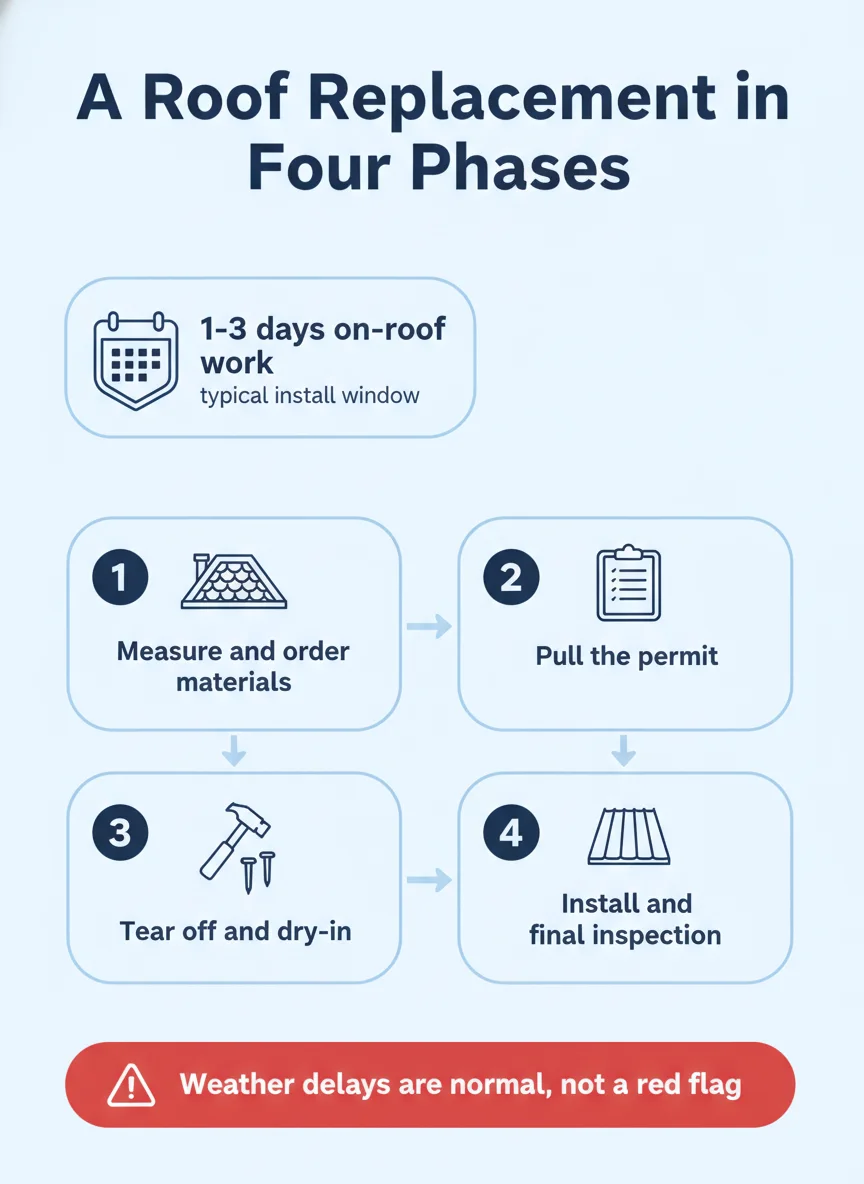
What Actually Determines How Long the Job Takes
A roof replacement isn't one task, it's a sequence of distinct phases, and each phase has its own variables. Knowing which part of the timeline is flexible and which part is out of anyone's hands makes the whole process less stressful.
Roof Size, Pitch, and Material
A single-story ranch with a low to moderate pitch and asphalt shingles installs faster than a two-story home with a steep roofline or a tile roof. Tile and metal both take longer to install correctly than shingles because of the extra steps involved in fastening and flashing each piece.
Roof size matters just as much as material. A home with multiple valleys, dormers, or a complex roofline takes a crew longer to tear off and flash correctly than a simple rectangular footprint, even if the square footage is similar.
Permitting and Material Availability
Florida Building Code requires a permit for roof replacement, and that permit has to clear the local building department before tear-off begins. Processing time is set by each city or county office and can shift depending on current workload, so it's worth asking your roofer what the current local timeline looks like rather than assuming a fixed number of days.
Material availability plays a role too. Common shingle colors and profiles are usually in stock, but specialty tile, certain metal panel profiles, or less common colors sometimes require an order lead time before the crew can schedule the install date.
| Material | Typical On-Roof Install Time | What Slows It Down |
|---|---|---|
| Asphalt shingle | 1 day for most homes | Steep pitch, complex roofline, rain |
| Metal | 2-3 days | Panel measurements, flashing detail, trim work |
| Concrete or clay tile | 2-4 days | Weight of material, breakage, underlayment detail |
What Happens Before the Crew Ever Shows Up
The visible part of a roof replacement, the tear-off and install, is actually the shortest stretch of the whole process. Before that day arrives, there's a measurement visit, a written estimate, a signed contract, a deposit, and the permit application. Each of those steps has to happen in order, and most of them happen while the homeowner is going about a normal week.
Material ordering typically happens once the contract is signed and the permit is submitted, so the crew has everything staged and ready for the scheduled install date instead of waiting on a delivery truck mid-job. A well-organized roofer coordinates these steps so the homeowner isn't left guessing about what's next.
Step-by-Step: A Typical Roof Replacement Timeline
While every job is different, most residential replacements in Florida follow a similar order of operations from first contact to final inspection.
- Measurement and estimate: A roofer measures the roof, often by satellite or an on-site visit, and provides a written scope before any work is scheduled.
- Contract and deposit: Once the homeowner approves the scope and materials, a signed contract and deposit lock in the project and material order.
- Permit submission: The roofer files for the required building permit with the local jurisdiction before any tear-off can legally begin.
- Material delivery: Shingles, tile, or metal panels are delivered to the property, typically staged a day or two ahead of the install date.
- Tear-off and dry-in: The old roofing material comes off, the deck is inspected, and the home is dried in with underlayment the same day.
- Install and detail work: New material goes down along with flashing, vents, and trim, finishing the weatherproof layer of the roof.
- Final inspection: The local building department signs off on the completed work, closing out the permit.
What You'll Find Once the Old Roof Comes Off
Tear-off day is when a lot of the real information about a roof's condition surfaces. Crews are working from the outside in, and the deck underneath is often a mystery until the old shingles or tile are removed.
Good Decking, Smooth Schedule
If the plywood or OSB decking underneath is solid and dry, the job proceeds right on schedule with no surprises. This is the most common outcome on roofs that were properly ventilated and maintained.
Soft Spots or Water Damage
If a crew finds soft, delaminated, or water-stained decking, that section needs to be replaced before new material can go down, which adds time and material to the job. This is also the kind of issue that's nearly impossible to catch before tear-off, which is why timelines are given as estimates rather than guarantees.
DIY vs. Calling a Licensed Roofer
Roof replacement is not a realistic do-it-yourself project for the vast majority of homeowners, and it's one of the few home projects where Florida law requires a licensed contractor and a permit regardless of scope. The combination of height, weight of materials, and code requirements makes this a job for a trained crew.
There are smaller pieces a homeowner can reasonably handle on their own, like clearing gutters before the project starts or moving vehicles and outdoor furniture away from the work area. Beyond that kind of prep work, everything from tear-off to final nailing pattern needs a licensed professional.
If a small section of roof is damaged rather than the whole thing, a roof repair visit may solve the problem faster and without triggering a full tear-off timeline at all.
Setting Realistic Expectations for Your Project
The most useful thing a homeowner can do is ask their roofer for a realistic range up front, factoring in the current permit office workload and material lead times for the chosen product. A straightforward asphalt shingle job on a single-story home in Tampa will move faster than a tile replacement on a large two-story home, and both are normal.
For homeowners comparing materials before they commit to a timeline, it helps to read up on asphalt shingles vs. metal roofing ahead of the estimate visit. Quality Plus Roofing & Solar walks every homeowner through the schedule before the first nail comes out, so there are no surprises about what week the crew will be on the roof.
Frequently asked questions
How many days does it take to replace a roof?
Most residential roof replacements in Florida take one to three days of actual on-roof work once the crew starts, depending on the roof's size, pitch, and material. The full process from signed contract to finished job, including permitting and material delivery, usually spans longer than the install itself.
Why does roof replacement take longer than expected?
Weather is the most common cause of delay, since asphalt and tile installs both require dry conditions to go down correctly. Permit processing time, material backorders, and discovering rotten decking once the old roof comes off can also add days.
Can a roof be replaced in one day?
A smaller or simpler residential roof can sometimes be torn off and installed in a single day, weather and crew size permitting. Larger homes, steep pitches, and tile roofs generally need more than one day on the roof.
Does rain stop a roof replacement mid-project?
Yes, a reputable crew will dry-in the exposed deck before a work stoppage so the home stays protected if rain moves in overnight or longer. Work resumes once conditions are safe and dry enough for proper material adhesion.
What slows down the permit process for a new roof?
Permit timelines vary by city and county and depend on current workload at the local building department. Complex jobs, like those involving structural changes or multi-family properties, tend to take longer to clear than a standard single-family re-roof.