Why a Florida Roof Needs a Seasonal Rhythm
Most of the country splits roof stress between a brutal winter and a mild summer. Central Florida flips that script. The heat and UV exposure run almost year-round, hurricane season stacks heavy wind and rain on top of that for half the calendar, and even the mild cold snaps that reach towns like Ocala and Jacksonville ask something different of a roof than the tropical heat does.
That means a single once-a-year glance doesn't tell the whole story. A roof that looked fine in January can take real punishment by August, and a roof that handled hurricane season fine can still be hiding sun damage that only shows up months later. Thinking in seasons instead of in one annual check is the easiest way to stay ahead of it.
What's Actually Wearing on the Roof Each Season
Two forces do almost all the damage to a Florida roof over the course of a year: ultraviolet exposure and water. They show up differently depending on the time of year, and knowing which one is active helps you know what to look for.
Spring: the ramp-up to storm season
Spring in central Florida is the calm before the storm, literally. Afternoon thunderstorms start picking up by late spring, and hurricane season officially opens June 1. This is the window to catch anything that drifted loose over the winter, lifted edges, cracked sealant around penetrations, or debris sitting in valleys, before a real storm tests it.
It's also a good season to look at attic ventilation. A poorly ventilated attic traps heat that will only get worse as summer temperatures climb, and that trapped heat accelerates wear on the underside of the roofing material from the inside out.
Summer: heat, UV, and the wettest months
Summer is the hardest season on a Florida roof. Surface temperatures climb well past the air temperature on a sunny roof deck, and that heat cycle, baking all day then cooling overnight, is what drives granule loss and brittleness in asphalt shingles over the years. Layer daily afternoon storms and the occasional tropical system on top of that, and summer does more cumulative damage than any other season.
This is also when small problems turn into visible ones. A pinhole in flashing that sat quietly all spring can let real water through once summer's downpours start hitting it several times a week.
| Season | Main Stress | What It Tends to Reveal |
|---|---|---|
| Spring | Storm-season ramp-up | Loose edges and worn sealant from winter |
| Summer | Heat, UV, heavy rain | Granule loss, flashing leaks, attic heat buildup |
| Fall | Debris and settling storms | Clogged valleys and gutters, hidden wind damage |
| Winter | Cold snaps and dry air | Brittle sealant, cracked caulk, expansion gaps |
The Parts of the Roof That Carry the Most Seasonal Stress
A roof is a system, not just a surface. The covering material, whatever it is, asphalt, tile, metal, or TPO, takes the brunt of the sun and rain, but flashing, sealant, and ventilation are what actually keep water out when the covering is doing its job. Those connection points move with temperature swings far more than the main field of the roof does.
Gutters and drainage matter just as much here as anywhere else, even though Florida doesn't deal with the leaf volume some northern states do. Gutters and downspouts that aren't moving water away fast enough during a heavy summer storm can push water right back up under the roof edge.
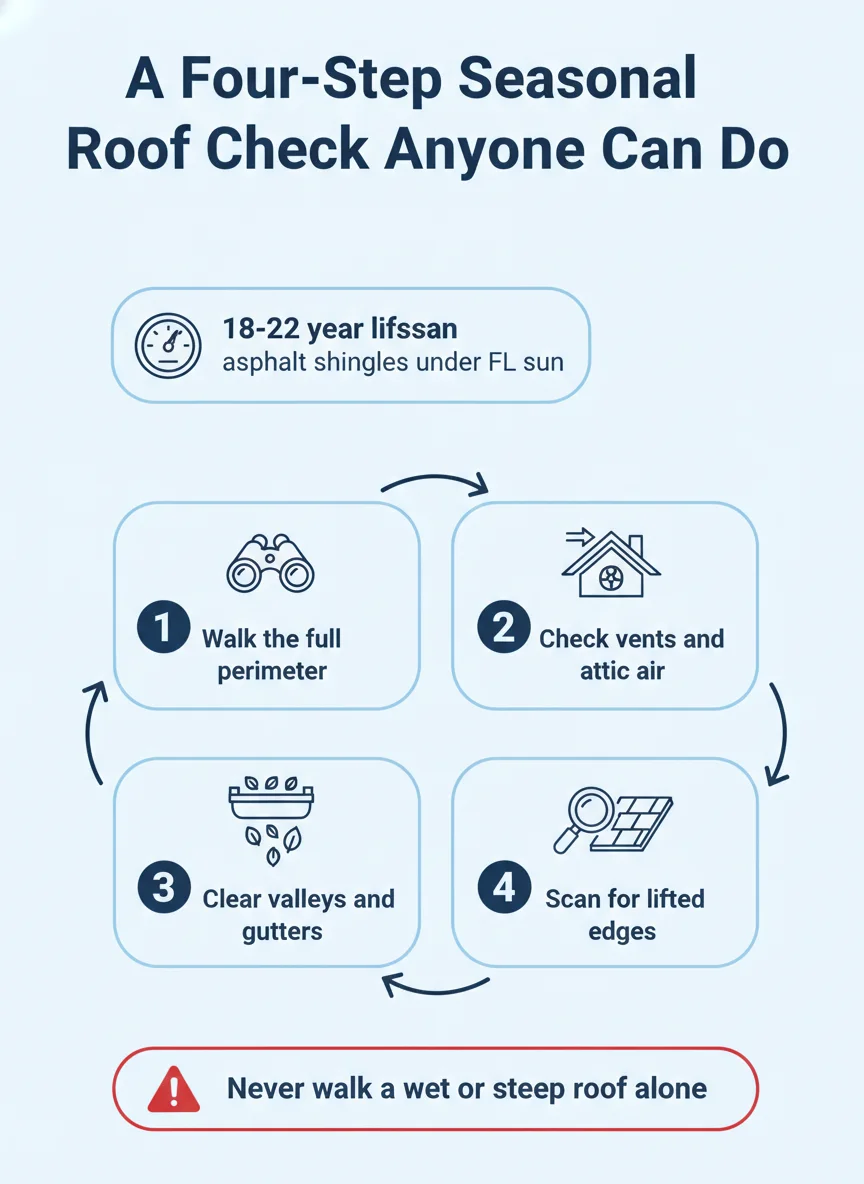
Step-by-Step: A Seasonal Roof Walk-Around
This is a ground-level and ladder-safe routine most homeowners can do four times a year. It's not a substitute for a professional inspection, but it will catch the obvious stuff between visits.
- Walk the perimeter: Look up from ground level on all four sides for lifted shingles, sagging lines, or visible debris.
- Check the attic: Feel for excess heat or humidity and look for daylight coming through anywhere it shouldn't.
- Clear the valleys: Clear leaves, pollen clumps, or shingle granules sitting in valleys where water concentrates.
- Inspect the gutters: Confirm water is draining freely and downspouts are directing it away from the foundation.
- Scan flashing points: Look at chimneys, vents, and skylights for cracked or gapped sealant.
- Note any stains: Check ceilings and attic rafters for discoloration that could point to a slow leak.
- Log what you find: Keep a simple photo log each season so changes are easy to spot year over year.
What a Seasonal Check Tends to Uncover
Signs that point to sun and heat damage
Granules collecting in the gutters, shingles that look curled or brittle at the edges, and a noticeably hotter attic than in past years are classic signs of cumulative UV and heat wear. None of these are emergencies on their own, but together they're a sign the roofing material is aging faster than expected.
Catching this early matters because sun damage is gradual. A roof that's 60% through its expected life can look fine from the driveway, which is exactly why a seasonal check, not just a glance when it rains, is worth the ten minutes.
Signs that point to storm or wind stress
Lifted or missing shingle tabs, dented metal flashing, or a downspout pulled loose from the fascia usually trace back to a specific wind event rather than gradual wear. These are worth addressing sooner rather than later, since an opening that lets wind-driven rain in during one storm will do it again in the next one.
If you notice this kind of damage after a specific storm, a morning-after look at the roof and gutters together, as covered in After the Storm: A Roof and Gutter Checklist for the Next Morning, is a good next step before deciding whether it needs a repair visit.
What You Can Check Yourself vs. What Needs a Licensed Roofer
Ground-level and attic checks are safe and useful for most homeowners. Looking for obvious lifted shingles from the yard, feeling attic heat, clearing visible debris from gutters you can reach safely, and watching for ceiling stains all fall into the do-it-yourself category and don't require getting on the roof itself.
Climbing onto the roof surface is a different matter, especially on steep pitches or tile roofing, which can crack under foot traffic from someone who doesn't know where to step. Flashing repairs, sealant replacement, and any diagnosis of a suspected leak path are best left to a licensed roofer who can walk the surface safely and knows what a normal wear pattern looks like versus an active problem.
The split really comes down to risk and diagnosis. A homeowner can spot that something looks off. Confirming what's actually wrong and fixing it correctly, especially with roof repair work that involves flashing or underlayment, is where a trained eye and the right materials matter.
Building the Habit Into Your Year
The easiest way to actually follow a seasonal routine is to tie it to something that already happens every year, like changing air conditioner filters or putting up and taking down hurricane shutters. Pick a spring date before storm season and a fall date after it, and treat those two as non-negotiable roof check days regardless of how the roof looks from the driveway.
Between those two anchor checks, a quick seasonal glance after any major storm or heat wave rounds out the calendar, and Quality Plus Roofing & Solar is here if any of those checks turn up something worth a closer look.
Frequently asked questions
How often should I have my roof inspected in Florida?
Twice a year works well for most central Florida homes, once in spring before storm season ramps up and once in late fall after the heaviest heat and rain have passed. That rhythm catches UV wear before it becomes a leak and storm stress before it becomes a bigger repair.
Does Florida weather really wear out a roof faster than other states?
Intense UV exposure and repeated summer heat cycles age asphalt shingles faster than in milder climates, which is part of why the industry-wide lifespan for asphalt shingles here runs shorter than the national average. Material choice and attic ventilation both affect how a roof actually holds up against that exposure.
What should I check on my roof before hurricane season starts?
Before hurricane season, look for lifted or loose shingle edges, debris sitting in valleys, and gutters that aren't draining cleanly, since all three can turn a heavy wind and rain event into a leak. A pre-season check is also a good time to confirm nothing from last year's storms was left unaddressed.
Do Florida roofs ever deal with ice or freeze damage?
True ice dams are rare in Florida, but a hard freeze in north and central Florida towns can still stress flashing and sealant that expanded all summer in the heat. It's less about ice buildup and more about the repeated expansion and contraction a roof goes through across the year.
What's the biggest seasonal mistake homeowners make with their roof?
The biggest mistake is treating the roof as out of sight, out of mind until a stain shows up on the ceiling. By the time a leak is visible indoors, water has usually been finding its way in for a while, which is why a seasonal walk-around catches problems earlier and cheaper to fix.