
Why a fast roof check matters before weather rolls into Central Florida
Florida homes see tropical systems and fast-moving storm fronts for months out of the year, and the difference between a smooth claim and a drawn-out argument with an insurance company often comes down to five minutes of prep before the wind picks up. A homeowner who photographs the roof, clears the gutters, and knows where the attic access sits is in a far better position than one who's scrambling once the rain starts.
This isn't about doing a full roof inspection yourself. It's about a quick, repeatable walk-around that takes less time than loading the dishwasher, and that gives you a documented baseline plus a few practical safeguards. Run it before every storm watch, not just the big named systems, because even a strong summer thunderstorm can toss debris and overload a clogged gutter.
What this checklist actually protects against
The five-minute version covers the two things that cause the most storm-related damage to a home: water finding a way in and loose objects causing impact damage. Both are largely preventable with basic prep, and both are easier to prove to an insurer when you have before-and-after documentation.
Water intrusion from clogged drainage
Gutters and downspouts packed with leaves and debris can't move water fast enough during a heavy downpour, so it backs up under the roof edge or pours down the siding instead of away from the foundation. A few minutes clearing the obvious debris before a storm reduces the chance of that backup finding a weak spot.
If you've had standing water in the gutters or seen them sag away from the fascia, that's worth noting in your photos too. A rain gutters system that's draining properly is one less thing to worry about once the rain actually starts falling.
Impact damage from loose items
Patio furniture, potted plants, trash cans, and anything else that can catch wind becomes a projectile in sustained gusts, and it's just as likely to damage your own roof or siding as a neighbor's. Securing or storing these items is the single fastest way to reduce impact-related damage before a storm arrives.
This step takes the least skill and the most time if you wait too long, since bringing in a yard's worth of furniture in the rain is a different job than doing it on a dry afternoon with the forecast two days out.
| Prep item | Before the storm | Why it matters |
|---|---|---|
| Roof and gutter photos | Dated, wide shots of every side | Gives an adjuster a clear before condition to compare against |
| Gutters and downspouts | Cleared of leaves and debris | Lets heavy rain drain instead of backing up under the roof edge |
| Loose yard items | Brought inside or tied down | Removes the most common source of wind-driven impact damage |
| Attic access and water shutoff | Located and reachable | Saves time if you need to check for intrusion or shut off water fast |
The parts of your home this checklist touches
Most of what you're checking lives in three places: the roof surface and edges, the gutter and downspout system, and the attic. The roof surface is what takes direct wind and rain, the gutters manage where that water goes once it runs off, and the attic is usually the first place evidence of a leak shows up long before you see a stain on a ceiling.
Knowing where your attic access panel and main water shutoff are located sounds basic, but plenty of homeowners have never needed either one and don't know where to look under pressure. Find both before you need them, not during an active leak.
Step-by-step: running the five-minute walk-around
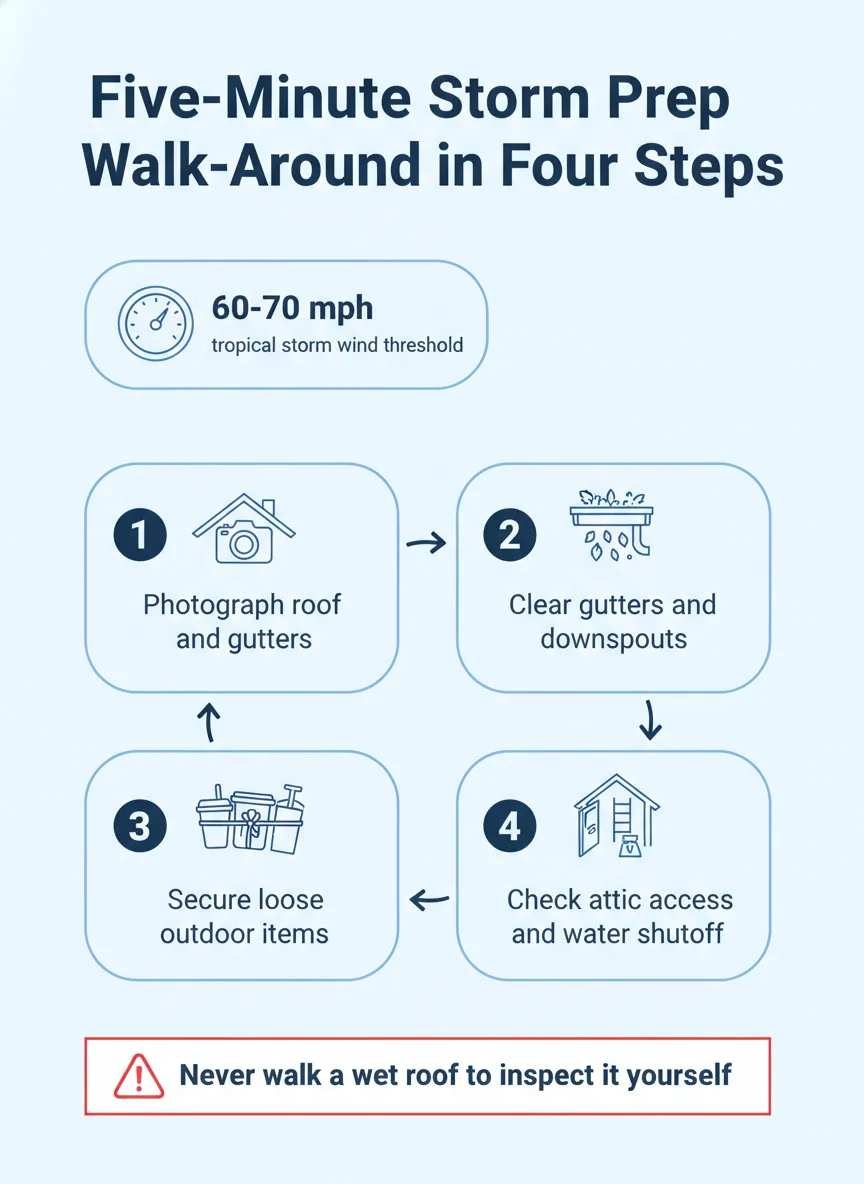
Work through these in order, starting outside and finishing inside the attic. None of it requires climbing on the roof itself.
- Photograph every side: Walk the exterior and take wide, dated photos of the roofline, gutters, and any visible damage from the ground.
- Clear gutters and downspouts: Pull out leaves and debris by hand or with a hose so water has a clear path off the roof during heavy rain.
- Secure loose outdoor items: Bring in or tie down furniture, planters, and trash cans that could lift in sustained wind.
- Trim overhanging branches: Cut back anything resting on or hanging low over the roofline that could snap and land on the surface.
- Locate attic access: Confirm you can reach the attic hatch quickly if you need to check for intrusion after the storm passes.
- Find the water shutoff: Know where the main shutoff valve is in case a storm damages a line elsewhere in the house.
- Check the morning after: Scan the roofline with binoculars from the yard and look in the attic for daylight or damp spots before deciding on next steps.
What you might find once the storm has passed
The morning-after check is just as important as the prep. You're looking for signs that water or wind found a way in, and most of those signs show up in the attic or along the gutter line before they ever reach a ceiling.
Signs to look for from the ground
Scan for missing or lifted material, visible dents or dings, gutters pulled away from the fascia, and any debris sitting directly on the roof surface. Binoculars from the yard are enough for this first pass, and comparing what you see against your before-photos makes changes easy to spot.
If anything looks off, that's the point to call for a professional look rather than climbing up yourself, especially on a surface that's still wet or has visible damage.
Signs to look for in the attic
Daylight showing through the decking, damp or discolored insulation, and water stains on the rafters are the earliest evidence of a leak, often well before a ceiling stain appears downstairs. Check these spots with a flashlight the same morning the weather clears.
Catching it at this stage means a smaller repair and a cleaner insurance conversation, since you have both the before-photos and the first sign of damage documented close together.
What you can handle yourself and what needs a professional
The photo documentation, gutter clearing, and securing loose items are all things any homeowner can do safely on their own, and doing them consistently before every storm watch is good practice regardless of what the forecast turns into. Trimming overhanging branches is usually fine too, as long as you're working from the ground or a stable ladder.
Anything involving the roof surface itself, including a close inspection for damage or any kind of repair, is a job for a licensed professional. Florida's wind and rain load the roof differently than most of the country, and a surface that looks fine from the ground can have lifted edges or compromised fasteners that aren't visible until someone's actually up there.
If the morning-after check turns up attic daylight, damp insulation, or missing material, treat it as a call-a-pro situation rather than a wait-and-see one. Small leaks get worse with the next rain, and a roof repair visit early is almost always simpler than the repair after a second storm finds the same weak spot.
Making this checklist a habit
The homeowners who come through storm season with the least drama are usually the ones who run this walk-around before every watch, not just the big named systems. Five minutes of photos and a clear gutter line costs you almost nothing and puts you ahead of both the weather and the insurance paperwork if something does go wrong.
If your last storm check turned up something that didn't look right, or you want a professional set of eyes on the roof before the next system rolls through, our neighbors in Lakeland and across the region can get a longer seasonal checklist going too. Quality Plus Roofing & Solar is glad to take a look before the weather turns, not just after.
Frequently asked questions
How far in advance should I prep my roof before a storm?
Start as soon as a storm enters the forecast cone, ideally two to three days out, because gutter clearing and securing loose items take longer once wind and rain start. Waiting until the morning of landfall leaves you doing the work in bad conditions.
Should I take photos of my roof before a storm even if nothing looks wrong?
Yes, a dated before-photo set is one of the most useful things you can hand an insurance adjuster if damage shows up later. It proves the condition of the roof and gutters going into the event, which speeds up any claim comparison afterward.
What should I do with outdoor furniture and loose items before a storm?
Bring in or tie down anything that can lift in high wind, including patio furniture, potted plants, trash cans, and decorations, since these become projectiles that damage roofing and siding on your home or a neighbor's. Garages and sheds work fine if you don't have interior storage space.
Is it safe to check my own roof after a storm passes?
Ground-level and attic checks are safe, but walking the roof itself is not, especially if it's wet or you can see visible damage from below. Use binoculars from the yard and check the attic for daylight or water stains instead of climbing up.
What's the first thing I should check inside the house after a storm?
Check your attic for daylight coming through the decking, damp insulation, or water stains on the rafters, since these show up before a ceiling stain does. Pair that with a look at the water shutoff valve so you know it's accessible if a pipe or line gets damaged elsewhere in the house.