Why Central Florida Roofs Get Black Streaks
If you've noticed dark, almost sooty stripes running down the shaded side of your shingles, you're not imagining it and it's not dirt washing off the attic vents. It's algae, and it's one of the most common cosmetic issues homeowners across Central Florida deal with, especially on roofs that sit under oak canopies or face north where sunlight doesn't dry the surface out as quickly.
The streaks tend to show up gradually, starting as faint gray specks near the ridge and widening into dark bands over a season or two. Florida's year-round humidity, afternoon rain, and mild winters give this organism exactly the conditions it needs to spread, which is why it's worth understanding before you reach for a hose or call someone to blast it off.
What's Actually Growing on Your Shingles
The organism behind those streaks is a blue-green algae called Gloeocapsa magma. It doesn't eat the asphalt itself, it feeds on the limestone filler that's mixed into most asphalt shingle formulas, and its dark pigment is a natural defense against UV light.
How It Spreads Across a Roof
Algae spores travel by wind and by birds landing on rooftops, which is why streaking often starts near a tree line or a neighbor's roof and spreads from there. Once a colony establishes itself on a shaded slope, rain runoff carries spores further down the roof plane, which is why the streaks usually run in vertical bands rather than appearing as isolated spots.
Moisture is the deciding factor. A roof that dries out quickly after rain, because it gets consistent direct sun, rarely develops heavy streaking even in a humid region. North-facing slopes, roofs shaded by mature trees, and areas around valleys or dormers where water lingers longest are where you'll see it concentrate first.
Why It Looks Worse Than It Is
Algae streaking can make a roof that's otherwise in good shape look neglected or aged well beyond its years, which is part of why it bothers homeowners so much. The dark coloring also absorbs more heat than clean shingle, which over many years can add modest extra thermal stress to the surface.
That said, algae alone generally doesn't cause leaks or structural damage. It's a surface issue, not a decking issue. If you're seeing streaking alongside curling, missing granules in handfuls, or soft spots underfoot, that's a different and more serious conversation, and it's worth having a roof repair visit look at the whole picture rather than assuming it's just algae.
| Method | What It Does | Risk to Shingles |
|---|---|---|
| Low-pressure soft wash | Applies a cleaning solution and rinses at low PSI | Minimal when done correctly |
| High-pressure power wash | Blasts away algae and granules together | High, strips protective coating |
| Algae-resistant shingles (new install) | Copper or zinc granules inhibit regrowth | None, built into the shingle |
| Copper or zinc strips | Metal ions wash down with rain and slow new growth | Minimal, added after install |
Algae-Resistant Shingles and Metal Strips Explained
Many asphalt shingle lines now come in an algae-resistant version, which blends tiny copper or zinc granules into the surface alongside the standard ceramic-coated granules. As rain passes over the shingle, it picks up trace metal ions that are toxic to algae spores, which slows new colonies from taking hold even in shaded, humid conditions.
If a full replacement isn't on the table yet, copper or zinc strips installed near the ridge work on the same principle. Rain carries the metal ions down the slope every time it rains, creating a thin band of protection below the strip. It's a lower-cost way to slow regrowth on an existing roof, though it won't remove streaking that's already there.
Step-by-Step: How to Treat Existing Algae Streaks
If you're set on addressing the streaks yourself rather than hiring it out, the sequence below keeps the shingles intact while actually killing the algae instead of just knocking the color down temporarily.
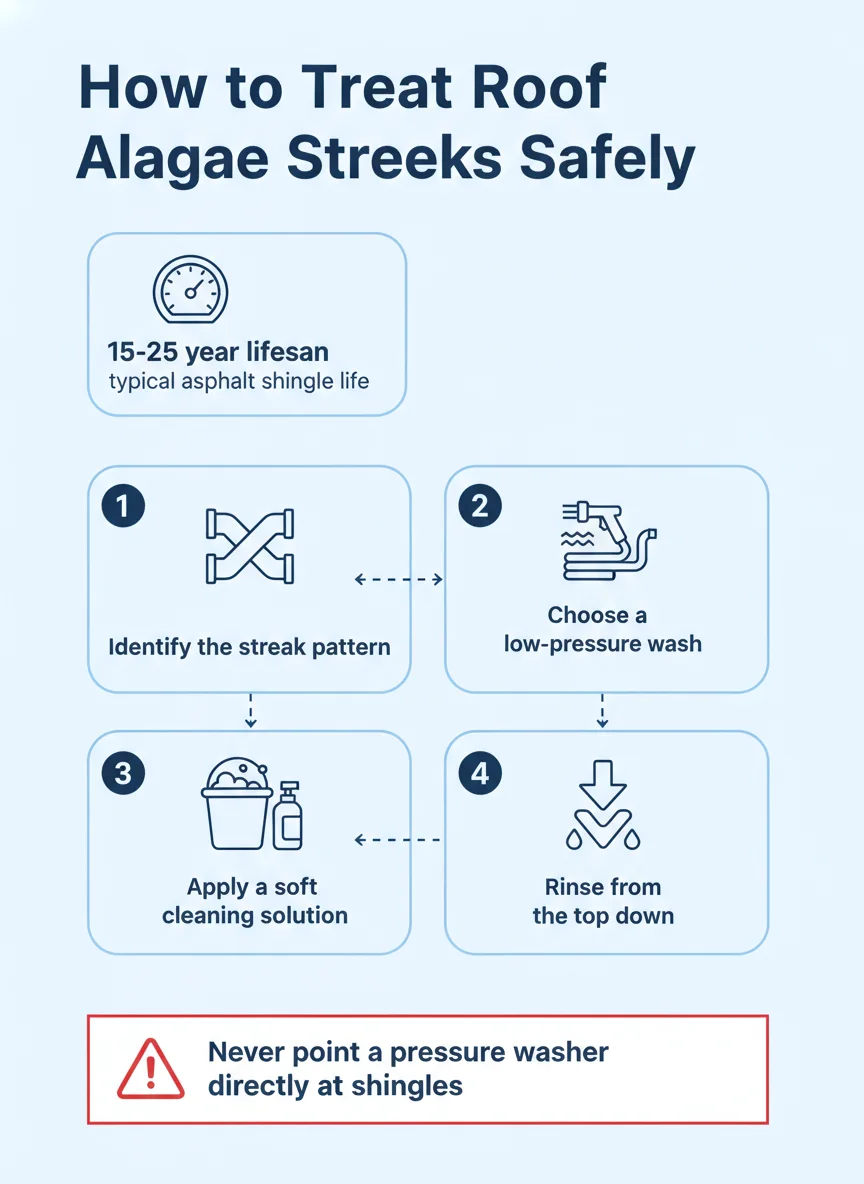
- Confirm it's algae: Streaks that run in vertical, feathered patterns on shaded slopes are almost always algae rather than dirt or mold, which helps you choose the right treatment.
- Protect landscaping first: Wet down plants near the downspouts and cover anything sensitive, since cleaning solutions will run off the roof during rinsing.
- Apply a soft wash solution: Use a low-pressure sprayer to apply a cleaner labeled safe for asphalt shingles, letting it sit for the time on the label before rinsing.
- Rinse at low pressure: Rinse from the ridge down using a garden hose or a soft-wash attachment under 500 PSI, never a standard pressure washer nozzle.
- Work in sections: Treat and rinse one slope at a time so the solution doesn't dry on the shingles before you've rinsed it off.
- Inspect while you're up there: Check for loose or curling shingles while the surface is wet and the algae pattern is easy to see against the clean shingle.
- Consider preventive strips: If the streaking was heavy, ask about copper or zinc strips near the ridge to slow regrowth going forward.
What You'll Find Once the Streaks Are Gone
Shingles That Clean Up Fine
In most cases, once the algae is washed away with a proper soft-wash treatment, the shingle underneath looks essentially like new, just a shade lighter than you remembered. This is the most common outcome on roofs under 15 years old where the algae hasn't been sitting long enough to cause any granule loss.
If this is what you find, the fix going forward is mostly preventive: keep overhanging branches trimmed back so the slope gets more sun and dries faster, and consider a copper strip near the ridge if the shaded side is a repeat offender.
Shingles That Show Granule Loss Underneath
Sometimes cleaning reveals a different problem: bare patches where granules have already washed or worn away, often on an older roof where the algae had been established for years before anyone treated it. Exposed asphalt degrades faster under Florida's UV exposure, so this is worth flagging.
If you see this, it's a sign the shingles are aging out rather than just needing a cleaning, and it's worth getting a second opinion on remaining service life before investing more in cosmetic treatments alone.
DIY Cleaning vs. Calling a Roofer
A homeowner comfortable on a ladder can handle a basic soft-wash treatment on a single-story roof with a low pitch, especially if the streaking is mild and recent. A pump sprayer, a shingle-safe cleaner, and a garden hose are really all the equipment involved for a light job.
Steep pitches, two-story homes, tile or metal roofing, or streaking that's accompanied by any soft spots, curling, or missing shingles are all reasons to bring in a professional instead. Walking a wet, algae-covered slope is genuinely dangerous, and a fall risk isn't worth saving a service call.
A roofer can also tell the difference between algae, lichen, and early moss growth at a glance, which matters because each one calls for a different treatment and moss in particular can lift shingle edges if it's left alone. If you're unsure which one you're looking at, that's worth a professional eye before you start spraying anything.
Keeping Streaks From Coming Back
Algae is a maintenance issue, not an emergency, but it's one that tends to recur in Florida's climate unless you address the conditions that let it take hold in the first place. Trimming back shade trees, improving attic ventilation so shingles dry faster, and choosing algae-resistant shingles whenever a slope gets replaced are the three moves that actually reduce how often you'll be dealing with this.
If you're weighing whether a future reroof is the better long-term fix for a shingle line that keeps streaking no matter what you do, it helps to understand the shingles we install and why before you decide. For homeowners in the Lakeland area dealing with recurring streaking, Quality Plus Roofing & Solar can take a look and tell you honestly whether a cleaning or a longer-term fix makes more sense.
Frequently asked questions
What causes black streaks on a roof?
Black streaks on a roof are almost always caused by a type of algae called Gloeocapsa magma, which feeds on the limestone filler in asphalt shingles. It thrives in humid, shaded conditions, which is why Florida roofs see it so often on north-facing slopes.
Are black roof streaks harmful?
Algae streaks are mostly cosmetic and don't eat through shingles the way rot or moss can. Left untreated for years, though, the dark coating absorbs more heat and can shorten shingle granule life, so it's worth addressing rather than ignoring indefinitely.
Can I pressure wash algae off my roof?
We don't recommend it. High-pressure water strips the protective granules right off asphalt shingles along with the algae, which does more damage than the streaks themselves and can void a manufacturer's warranty.
Does algae come back after cleaning?
Yes, unless the spores are killed at the root, algae typically returns within a year or two, especially on shaded slopes in a humid climate. A soft wash treatment combined with algae-resistant shingles on a future replacement slows the regrowth significantly.
Do algae-resistant shingles actually work?
Algae-resistant shingles use copper or zinc granules blended into the surface, which release ions that inhibit algae growth over time. They don't make a roof immune forever, but they meaningfully extend the time between streaking compared to standard shingles.