
When the Claim Letter Isn't the Final Word
A denial letter or a check that's thousands short of what the repair actually costs feels final, but it rarely is. Florida homeowners deal with this often enough that there's a well-worn path for challenging the decision, and most of it doesn't require a lawyer to get started.
The key is figuring out which kind of problem you actually have. A flat denial means the insurer says there's no covered loss at all. An underpayment means they agreed something happened but priced it too low to finish the job. Each one has a different next move, and picking the wrong one wastes time you don't have before the next storm season.
Why Insurers Deny or Underpay Roof Claims
Insurance adjusters work from a single visual inspection and a set of company guidelines, and both leave room for disagreement. Understanding the two most common buckets, outright denial and lowball payout, makes it easier to know what document or argument actually moves the needle.
Common Denial Reasons
The most frequent denial reason is the insurer labeling damage as wear and tear, age-related deterioration, or cosmetic rather than the result of a specific covered event like wind or impact. Insurers also deny claims when they believe the damage existed before the policy's current term, sometimes pointing to satellite imagery from months or years earlier.
Missed slopes are another common issue. If an adjuster only inspects the most visibly damaged side of the home and skips a slope with less obvious wear, the claim can come back approved for partial work instead of the full system, which creates a mismatched repair that a roof repair crew will flag immediately.
How Underpayment Happens
Underpayment usually starts with an incomplete scope. The adjuster's estimate might include the field of the roof but leave out flashing, ventilation components, or code-required upgrades that a licensed contractor knows are necessary to pass final inspection. Depreciation is another factor, since many policies hold back a portion of the payout until the work is actually completed.
Material and labor pricing in the adjuster's software can also lag behind what contractors are actually charging in your area, especially after a wave of storm activity drives demand up. A contractor-written estimate that matches current local pricing is often the clearest way to show the gap.
| Situation | What It Means | Typical Next Step |
|---|---|---|
| Full denial | Insurer says no covered damage exists | Request a re-inspection with documentation |
| Partial approval | Some damage covered, other areas excluded | Submit a supplement covering missed items |
| Payout too low | Insurer agrees but the scope or pricing falls short | Compare line items, request a revised estimate |
| Settlement stuck | Negotiation has stalled after a supplement | Consider the appraisal clause or a public adjuster |
The Documents That Make or Break a Re-Inspection
A second look from the insurer only works in your favor if you bring something new to the table. Photos from the same angle as the original storm, dated receipts for temporary repairs, and a written scope from a licensed contractor all give the adjuster a reason to revisit the file instead of rubber-stamping the first decision.
Weather data for the date of loss is also worth pulling together, since it ties the damage to a specific, documented event rather than leaving it open to the wear-and-tear argument.
- Dated photos of the damage from multiple angles
- A written, itemized scope from a licensed contractor
- Weather records for the date the damage occurred
- Copies of all correspondence with the insurance company
- The original estimate and the denial or payout letter
Step-by-step: What to Do After a Denial or Low Offer
Working through these in order keeps the claim moving without burning the relationship with your adjuster before you need them most.
- Read the reason: Get the specific denial or underpayment code in writing, not just a verbal explanation, so you know exactly what's being disputed.
- Get a contractor's scope: Have a licensed contractor document the full damage with photos and a written estimate that matches current pricing.
- Request re-inspection: Send the new documentation to the insurer and formally request a second look at the property.
- File a supplement: If the issue is scope or pricing rather than coverage, submit a detailed supplement itemizing what was missed.
- Track every response: Keep written records of every call and letter in case the claim needs to move to appraisal or a formal complaint.
- Consider appraisal: If the gap stays wide after a supplement, invoke the appraisal clause in your policy to bring in independent appraisers.
- Escalate if needed: A complaint to your state's insurance department or a public adjuster are both options when the above steps stall out.
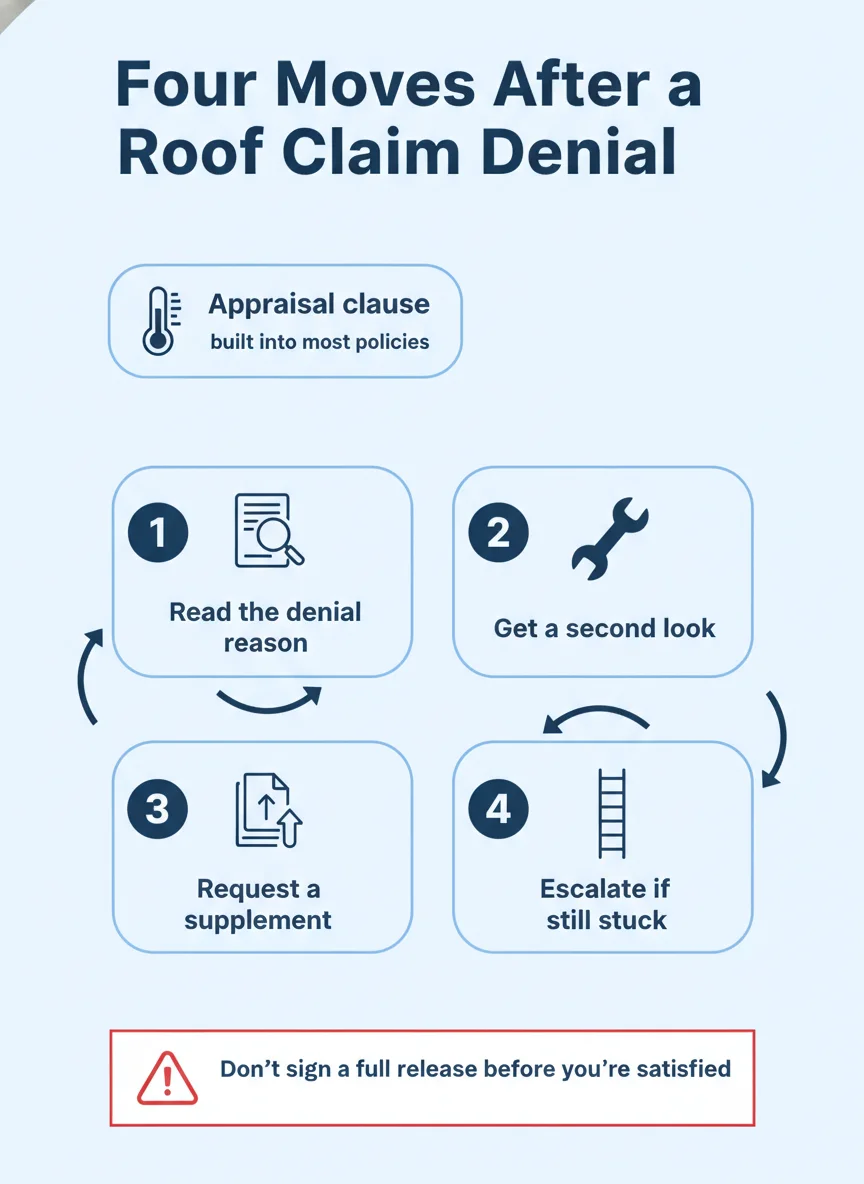
Diagnosing Your Options: Supplement, Appraisal, or Public Adjuster
Once you know whether you're dealing with denial or underpayment, three tools cover most situations: a supplement, the appraisal clause, or outside help from a public adjuster.
Filing a Supplement
A supplement is a formal request to revise the original estimate, and it's the right tool when the insurer has agreed there's covered damage but the scope or pricing is incomplete. A strong supplement includes line-item comparisons against the original estimate and photos tied to each missing item, which gives the adjuster a clear reason to approve the change.
Supplements can be submitted more than once as new issues come up during the repair process, so it's not a one-shot deal. Many contractors handle this step directly with the insurer as part of the project.
Invoking the Appraisal Clause
The appraisal clause lets each side hire an independent appraiser, and if those two can't agree, a neutral umpire settles the dollar amount. This tool only resolves disputes over the amount of a covered loss, not whether the damage is covered in the first place, so it's not the right move for a flat denial.
Appraisal tends to work best when a supplement has already been tried and the insurer's number still doesn't come close to a reasonable scope of work for the damage on file.
DIY vs Calling a Pro
Homeowners can absolutely handle the paperwork side: gathering photos, pulling weather records, and keeping a written log of every call with the insurer. None of that requires a license, and staying organized often speeds up whatever path you take next.
Where a licensed contractor earns their keep is in the technical documentation. Insurers respond differently to a photo taken from the ground than to a full written scope with measurements, material specs, and code requirements attached. That's the difference between an adjuster dismissing a claim and an adjuster having a hard time ignoring it.
Negotiating the dollar figure itself, invoking appraisal, or deciding whether a public adjuster makes sense are bigger decisions. Those are worth a conversation with your contractor and, on larger disputes, an attorney who handles property insurance, since the stakes go up once you're talking about appraisal or a formal complaint.
Getting the Repair Done Right, However the Claim Resolves
However the claim shakes out, the goal stays the same: a repair that actually holds up through the next storm season, done by a crew that pulls permits and stands behind the work. If you're still early in the process, the full claim timeline is worth a read before you make any final decisions.
Homeowners in Lakeland and across Central Florida run into denied and underpaid claims more often than most people expect, and a second opinion before you sign anything rarely hurts. Quality Plus Roofing & Solar documents damage, writes supplements, and works directly with carriers so the settlement actually matches the repair the home needs.
Frequently asked questions
Why would my roof insurance claim get denied?
Most denials come down to the insurer classifying the damage as wear and tear, cosmetic, or pre-existing rather than sudden and storm-related. A re-inspection with clear documentation of the damage pattern often changes that classification.
What's the difference between a denied claim and an underpaid claim?
A denied claim means the insurer says nothing is covered, while an underpaid claim means they agreed to pay but the number is too low to actually complete the work. The second situation is usually handled through a supplement request rather than a full appeal.
Can my roofer force the insurance company to pay more?
A roofer can't force an insurer to do anything, but a licensed contractor can document the damage, write up a detailed scope, and submit a supplement that gives the adjuster the information needed to revise the payout. Final decisions still sit with the insurance company.
What is the appraisal clause and when should I use it?
The appraisal clause is a provision in most property policies that lets you and the insurer each hire an independent appraiser to settle a disagreement over the dollar amount of a covered loss. It's typically used after a supplement request stalls or the gap between offers stays wide.
Should I hire a public adjuster for a denied roof claim?
A public adjuster can be worth it on a complex or high-value claim where you want someone negotiating on your behalf for a fee, usually a share of the settlement. For straightforward underpayment, many homeowners start with a contractor-prepared supplement before taking that step.