
Why Commercial Roof Decisions Carry More Weight
A commercial roof usually covers a much larger area than a residential one and often protects inventory, equipment, or tenant space underneath it. In central Florida's climate, flat and low-slope commercial systems deal with standing water and UV exposure in ways that push problems along faster than they might in a drier region.
Because the stakes are higher, the cost of waiting on a known issue is different too. A homeowner might live with a slow drip for a season. A property manager delaying the same kind of fix on a commercial building risks tenant complaints, inventory damage, or a larger structural repair down the line.
How a Small Issue Turns Into a Big One
Commercial roofing systems like TPO are built as a membrane over insulation and decking, and the membrane is the only thing standing between the weather and everything underneath. Once that membrane is compromised, even in a small spot, water finds ways to travel sideways before it ever shows up as a visible leak inside the building.
The First 30 to 60 Days
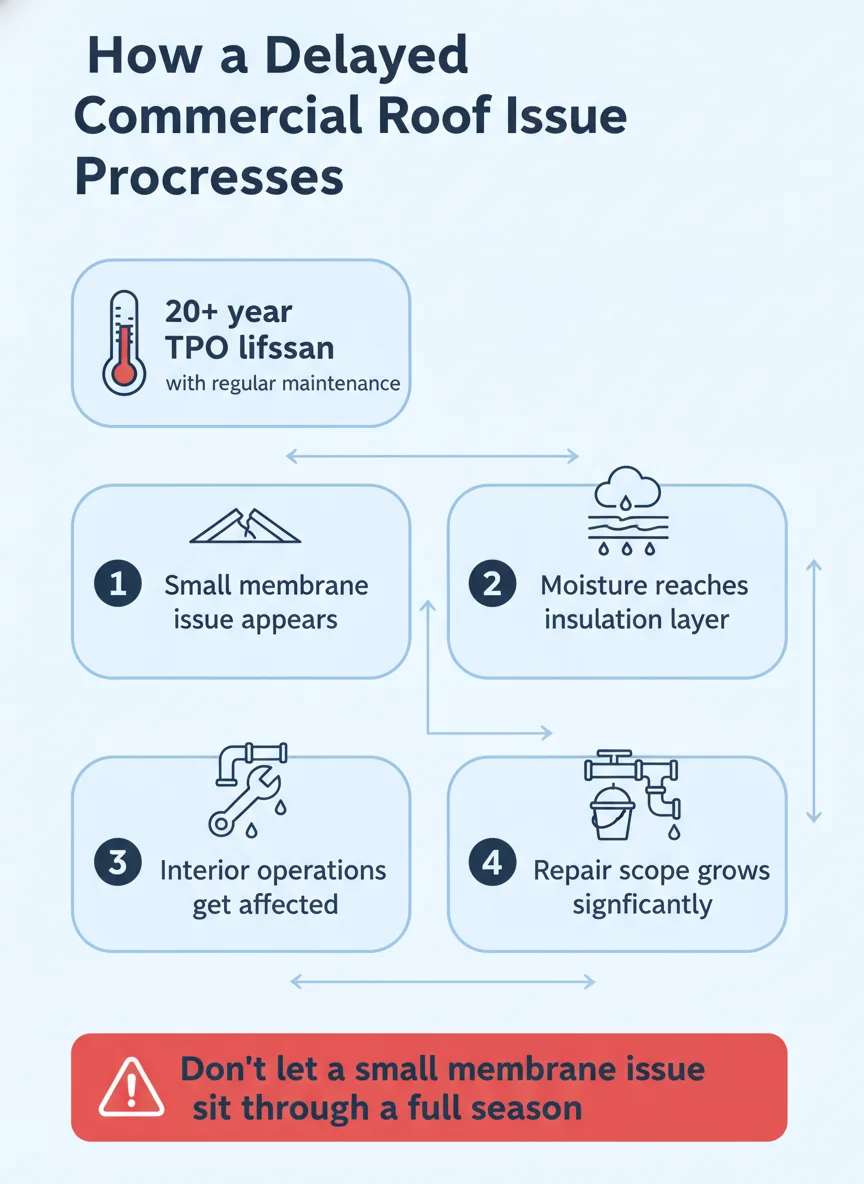
A membrane seam that starts lifting or a small puncture from foot traffic or debris typically doesn't cause visible interior damage right away. Water that gets underneath the membrane can travel along the insulation layer for a while before it finds a spot to drip through, which means the delay between the actual damage and the moment you notice it can be longer than expected.
This window is the cheapest time to fix the problem, because the damage is still contained to the roof system itself and hasn't reached the building's interior or structure.
Past the 60-Day Mark
Once moisture has had a few months to travel, it typically reaches the insulation layer, which loses its effectiveness when wet and can no longer be dried out in place. At this stage, a repair that would have addressed a membrane seam now often needs to include replacing a section of insulation as well, which extends both the scope and the timeline of the work.
Interior signs, staining, a musty smell, or temperature inconsistencies in the space below, usually start showing up around this point, which is often the first time building occupants notice anything at all.
| Timeframe | Typical Scope | What's Affected |
|---|---|---|
| Caught early | Localized membrane patch or seam repair | Roof system only |
| 30-60 days delayed | Membrane repair plus insulation check | Roof system and possibly insulation |
| 60+ days delayed | Membrane and insulation replacement in the affected area | Roof system, insulation, and potentially interior finishes |
What's Actually Happening Under a Flat Roof System
A commercial roof system, whether TPO or another membrane type, is built in layers. The membrane sheds water and UV. Insulation underneath provides thermal performance and adds structure. Decking below that ties everything to the building. Each layer depends on the one above it staying intact, which is why membrane condition is the first thing worth checking on any commercial building.
Drainage matters just as much as the membrane itself. Flat and low-slope roofs rely on properly sloped drains and scuppers to move water off the surface, and standing water that sits for more than a day or two after rain accelerates wear on the membrane even if there's no visible damage yet.
Step-by-Step: What a Commercial Roof Evaluation Looks Like
Whether you're dealing with a known issue or just haven't had eyes on the roof in a while, the process for evaluating a commercial roofing system follows a consistent path.
- Surface walk: A full walk of the membrane surface checks for lifting seams, punctures, and areas where debris has accumulated.
- Drainage check: Drains and scuppers get checked for clogging and proper slope, since standing water accelerates almost every other problem.
- Moisture scan: Where available, a moisture scan of the roof surface identifies wet insulation before it shows up as an interior leak.
- Interior check: Ceiling tiles and finishes near the roofline get checked for early staining that hasn't been reported yet.
- Scope and timeline: Findings get translated into a clear scope of work with an honest estimate of how long the repair or replacement will take.
What Waiting Actually Costs Beyond the Roof
Operational Disruption
A leak that's caught early rarely interrupts business at all. One that's been sitting for months, especially if it's affected inventory, equipment, or tenant space, can force a temporary shutdown of part of the building while repairs happen, which is a cost that never shows up on the roofing invoice but hits the bottom line just the same.
For multi-tenant buildings, a delayed roof issue can also strain the relationship with tenants who expect a dry, comfortable space as part of their lease.
Scope Creep
The clearest cost of waiting is scope. A membrane patch handled early stays a membrane patch. The same issue left through a full season can turn into an insulation replacement, and left longer than that, it can start affecting decking or interior finishes. Each stage adds materials, labor, and time to what started as a small fix.
None of this means every delay ends in disaster, but the pattern holds often enough that catching issues early is consistently the lower-cost path.
What Building Owners Can Monitor, and What Needs a Licensed Contractor
Building owners and property managers can reasonably keep an eye on drainage after storms, watch for interior staining near the roofline, and log any maintenance requests related to temperature or moisture in top-floor spaces. These observations, tracked over time, give a contractor a much clearer picture when they do come out.
Getting on a commercial roof to assess membrane condition, run a moisture scan, or evaluate insulation requires training and equipment that go beyond what a facilities team typically has on hand. This is licensed contractor territory, both for safety and for getting an accurate read on what's actually happening under the surface.
The practical approach is a regular observation routine on your end paired with a periodic professional inspection, rather than waiting for a tenant complaint to trigger the first look at the roof in years.
Deciding When to Act
Every commercial roof issue starts somewhere small. The building owners who come out ahead are the ones who treat a membrane seam or a drainage problem as worth checking now, not after the next lease renewal or budget cycle.
If you manage a commercial property in central Florida and haven't had eyes on the roof recently, getting ahead of a small issue is almost always cheaper than managing a big one, and Quality Plus Roofing & Solar handles both new construction and existing commercial systems across the region.
Frequently asked questions
Does a small commercial roof leak get worse if I wait to fix it?
Yes, in most cases a small leak grows because water finds the path of least resistance and widens it over time. What starts as a contained membrane issue can spread to the insulation layer beneath it if it isn't addressed.
How often should a commercial roof be inspected?
Commercial roofs benefit from a regular inspection schedule, especially before and after the region's heavier wind season, since flat and low-slope systems show wear differently than residential roofs. Your roofing contractor can recommend a schedule based on your building's roof type and age.
Can waiting on commercial roof repair affect my business operations?
It can, particularly if the building houses inventory, equipment, or tenants sensitive to moisture or temperature swings. A roof issue that's ignored can eventually interrupt operations in ways that cost far more than the repair itself would have.
Is TPO roofing repairable or does it need full replacement?
TPO membrane is generally repairable when the damage is limited to a seam or a localized puncture, and a full replacement is usually reserved for widespread membrane failure or when the roof has reached the end of its service life.
What's the first sign a commercial roof needs attention?
Ponding water that doesn't drain within a day or two after rain, visible membrane seams lifting, or interior ceiling stains near the roofline are usually the first signs. Catching these early keeps the fix contained to a repair rather than a larger project.