
Not Every Roof Problem Means a Full Replacement
Homeowners across Lakeland, Ocala, and the rest of central Florida often call about a leak assuming they're about to hear the worst. In reality, a large share of roof problems are fixable without replacing the entire roof, and repair costs vary a lot depending on the specific damage found.
Because repairs are diagnosed case by case rather than priced by square footage, it's harder for homeowners to know what to expect walking in. Understanding what typically drives repair cost up or down helps set realistic expectations before a crew ever climbs the ladder for Roof Repair.
Why Leak Location and Roof Type Drive the Price
Two repairs that sound similar over the phone, both described as "a leak near the chimney," can price very differently depending on where the water is actually entering and what material the roof is made of.
Finding the Actual Source
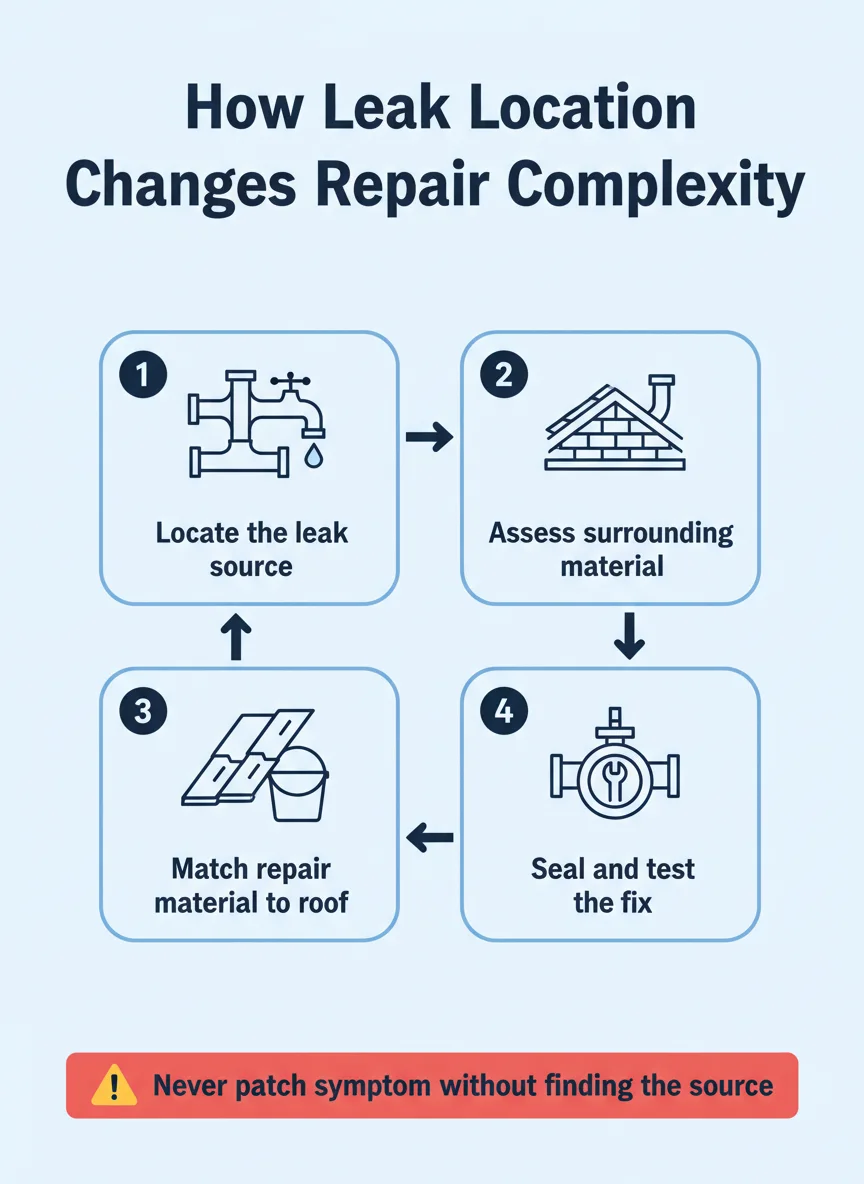
Water rarely enters exactly where it shows up as a stain inside the house. It can travel along a rafter or piece of decking before dripping somewhere visible, which means diagnosis sometimes takes longer than the repair itself. A leak traced quickly to a single failed seal costs far less than one that requires opening up multiple sections of roof to trace the path.
Flashing around chimneys, skylights, and vent pipes is one of the most common failure points, and it's usually a more contained fix than a leak that has spread into a valley or under multiple courses of shingles.
Roof Material Complexity
Shingle repairs tend to be the most straightforward because matching material is easy and the work is relatively fast. Tile repairs take more care since tiles can crack under foot traffic, and matching an older tile profile sometimes takes extra sourcing time. Metal repairs require matched fasteners and sealants to keep the panel system watertight.
TPO commercial repairs are their own category, usually priced by the extent of the damaged membrane section and how it needs to be welded or patched back into the existing system.
| Factor | Simpler Repair | More Involved Repair |
|---|---|---|
| Leak location | Isolated flashing failure | Leak traced through multiple roof sections |
| Material | Standard shingle patch | Tile or metal requiring matched materials |
| Decking condition | Dry, solid decking underneath | Rotted decking discovered during repair |
| Access | Easy walkable roof area | Steep or hard-to-reach section |
The Layers a Repair Crew Has to Work Through
Even a targeted repair usually involves lifting the surface material to check the underlayment and decking beneath it before resealing. Skipping that step and just caulking over a symptom rarely holds up, because it doesn't address whatever let water in during the first place.
On older roofs, decking that's been exposed to moisture for a while can be soft or delaminated, and that needs to be replaced before new material goes back on. That's one of the most common reasons a repair estimate grows once work is underway.
Step-by-step: How a Roof Repair Typically Happens
Most repair visits follow a consistent process, even though the scope of work varies from job to job.
- Interior assessment: A crew reviews where the stain or leak is showing up inside the home.
- Roof inspection: The roof surface is checked for the likely entry point, flashing condition, and material wear.
- Confirm the diagnosis: Once the source is identified, the crew explains what needs to be opened up and repaired.
- Repair the area: Damaged material is removed, decking is checked, and new material and flashing are installed.
- Seal and test: The repaired area is sealed and checked to confirm the leak path is closed.
Repair vs. Replace: When Each Makes Sense
Repair makes the most sense when the damage is isolated, the roof is otherwise in good shape, and the material still has years of life left in it. A single failed flashing detail or a handful of cracked tiles on an otherwise sound roof is a textbook repair situation.
When Repair Is the Right Call
If the roof is younger than its expected lifespan, has no widespread granule loss or curling, and the damage is contained to one area, a repair usually resolves the problem cost-effectively. This is common after a single storm event or an isolated flashing failure.
Our post on how long a roof lasts in Florida breaks down typical material lifespans, which is useful context when deciding whether a repair is worth it for your roof's age.
When Replacement Makes More Sense
If a roof already shows widespread wear, multiple past repairs, or damage in several unrelated areas, patching one more spot often just delays a bigger expense. At that point, a full Residential Roofing replacement usually offers better long-term value than continuing to chase individual leaks.
A roofer who inspects the whole roof, not just the reported leak, can tell you honestly which category your situation falls into.
What Homeowners Can Check vs. What Needs a Professional Repair
Homeowners can safely check attic spaces for visible staining, note when a leak appears relative to rainfall, and photograph interior damage to share with a roofer. That information speeds up diagnosis considerably.
Getting on the roof itself to inspect flashing or attempt a patch isn't something most homeowners should do, both for safety reasons and because an improperly sealed patch can trap water instead of shedding it. A licensed roofer has the tools and experience to trace a leak correctly the first time.
This is especially true for tile roofs, where foot traffic from someone unfamiliar with the material can crack tiles and create new leak points in the process of checking for an existing one.
Getting a Repair Priced Right
The best way to get a fair repair estimate is to have a crew inspect the roof in person rather than quoting off a description over the phone, since the actual scope often differs from what it sounds like from the ground. A clear, written explanation of what was found and what's being repaired protects you from surprises.
If you're not sure whether your roof needs a repair or a full inspection first, our post on signs you need a roof inspection is a good next read. Quality Plus Roofing & Solar backs its repair work with a lifetime workmanship warranty across central Florida.
Frequently asked questions
Why do some roof repairs cost more than others?
Repair cost depends mostly on how hard the leak is to find, how much surrounding material has to come off to fix it, and whether matching material is easy to source. A simple flashing reseal is a very different job than a repair that involves opening up a valley or replacing damaged decking.
Does the type of roof affect repair pricing?
Yes, tile and metal roofs generally take more time and specialized handling to repair than shingle roofs, since tile can crack if walked on incorrectly and metal panels need matched fasteners and sealants. Shingle repairs are usually the most straightforward of the common roof types.
Is it cheaper to repair a roof or replace it?
Repair is typically the lower-cost option for isolated damage on a roof that's otherwise in good condition, while a roof with widespread wear, multiple leak points, or an aging material past its expected lifespan often makes more financial sense to replace outright. A roofer can walk the roof and tell you which category yours falls into.
Why does finding the source of a leak sometimes cost more than fixing it?
Water can travel along decking or rafters before it shows up as a stain inside the home, so the visible damage isn't always near the actual entry point. Tracing the real source sometimes takes more time than the repair itself, especially on complex roof lines.
Can a small repair now prevent a bigger cost later?
Yes, addressing a small leak or damaged flashing early usually costs less than waiting until water damage spreads to decking, insulation, or interior finishes. Small repairs caught early are almost always the more affordable path over time.