
When a Florida Roof Opens Up Without Warning
A big oak limb coming down in a summer storm, straight-line winds peeling back a section of material, or a sudden downpour finding a weak spot overhead, it happens fast and it happens often across central Florida. One minute the house is dry, the next there's water coming through the ceiling and nobody planned for it.
What you do in the first hour or two after that matters just as much as the repair that comes later. Water sitting on drywall and insulation for a day does more damage than the original opening ever would, and a few smart moves now can be the difference between a simple patch and a much bigger job.
Why the First 24 Hours Make or Break the Damage
A hole in a roof is really two problems stacked together: the structural opening itself, and the clock that starts running the moment rain starts finding its way through it. Addressing both quickly keeps the second problem from turning into the bigger one.
The Water Problem Moves Fast
Once water gets past the roof deck, it doesn't stop at the ceiling. It runs along joists, soaks insulation, and can travel several feet from the original opening before it ever shows up as a stain. By the time you see a wet spot on the ceiling, the damage above it is usually already wider.
That's why catching the water at the source, even with something as simple as a trash can or a folded towel, buys real time. It's not a fix, it's damage control until someone who knows what they're doing can get eyes on the actual opening.
The Structural Problem Needs a Trained Eye
What looks like a small hole from the ground can be hiding a much larger soft or weakened area once a roofer actually gets up there. Broken decking, exposed framing, and loosened material around the edges of the damage aren't always visible from inside the house.
That gap between what you can see and what's actually wrong is exactly why climbing up to look for yourself, especially right after a storm, is a bad idea. It's also why a same-day roof repair visit from a licensed crew is worth the call rather than waiting to see if it gets worse.
| Situation | What to Do | What to Avoid |
|---|---|---|
| Active storm, water coming through ceiling | Move belongings, place buckets, call for help | Going outside or onto the roof |
| Storm has passed, daylight, visible damage | Photograph the area, call a roofing company | Climbing up to inspect it yourself |
| Crew arrives to tarp | Clear the area below, let them work | Standing underneath or directing from a ladder |
| Days after tarping | Watch for new leaks, schedule the real repair | Letting the tarp sit for weeks untouched |
What a Tarp Actually Does, and What It Doesn't
A tarp is a barrier, not a repair. Its whole job is to keep rain from getting through an opening for a short stretch of time while a permanent fix gets scheduled, materials get ordered, or an insurance claim works its way through the process.
What it can't do is restore the structural integrity of the area underneath it. A tarped section is still a damaged section, so the house isn't back to normal just because the water has stopped coming in. Treat it as a hold, not a finish line.
Step-by-Step: What to Do in the First 24 Hours
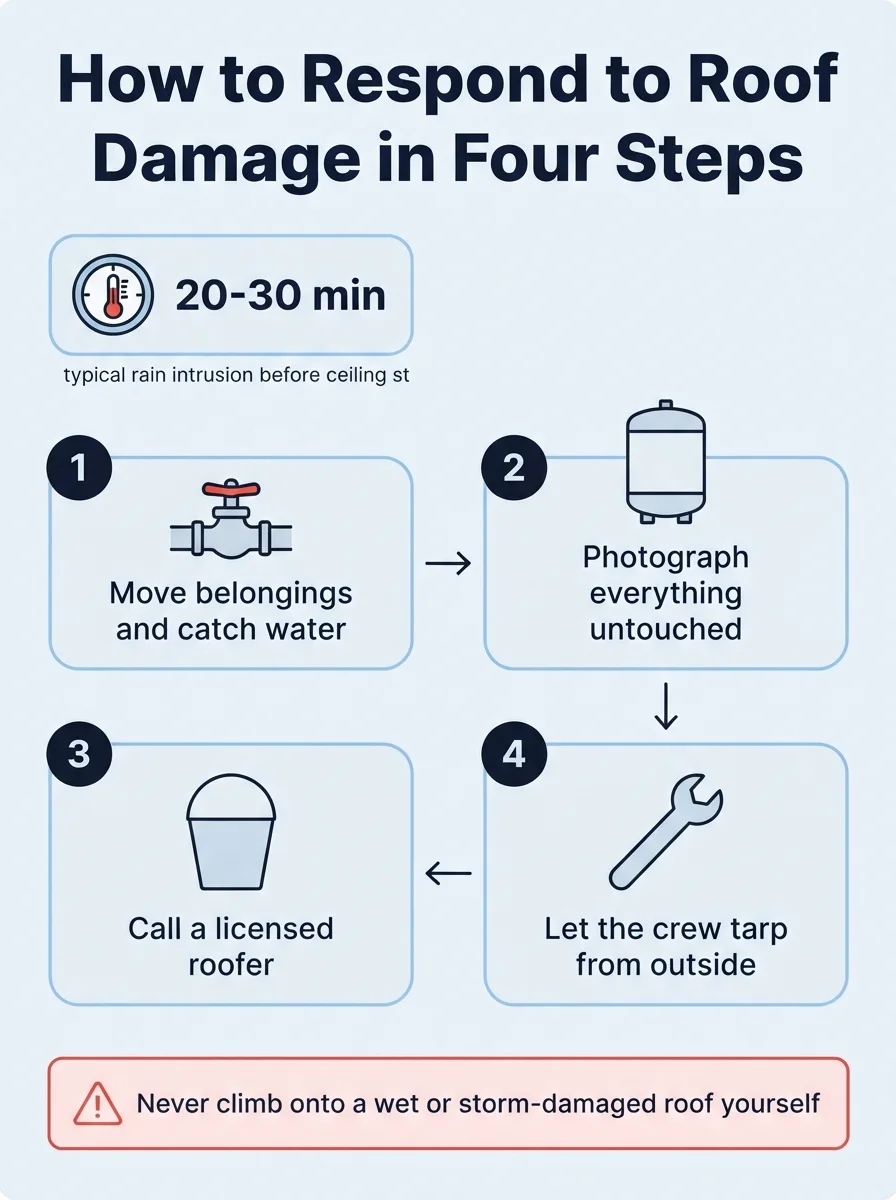
The order of operations here is simple on purpose. The goal is to protect people and belongings first, document the damage second, and get a professional on site third.
- Get everyone clear: Move people and pets away from the area directly under the damage in case more material comes loose.
- Catch the water: Set out buckets, trash cans, or towels under any active drip to protect flooring and furniture below.
- Move valuables: Relocate furniture, electronics, and anything irreplaceable out from under the affected area if it's safe to do so.
- Photograph everything: Take pictures of the damage, the water stains, and any debris from the ground and from inside before anyone touches it.
- Call a licensed roofer: Reach out to a roofing company that offers emergency service rather than waiting until regular business hours.
- Stay off the roof: Leave the climbing and the tarping itself to a trained crew with the right equipment and harnessing.
- Note the time and conditions: Write down when the damage happened and what the weather was doing, since that detail matters for an insurance claim.
What You'll Find Once the Tarp Comes Off
Minor Openings
A smaller event, like a single limb strike or a localized failure, often turns out to be a contained repair once a crew gets a real look at the decking and surrounding material. These jobs usually move quickly once the area is dry and accessible.
Even a contained repair deserves a full look at the surrounding area, though, since wind-driven rain has a way of finding its way under adjacent sections that look fine from a distance.
Wider Damage
Sometimes what started as one opening reveals a wider weak spot once the covering material comes back, especially on a roof that was already older or had existing wear. In those cases a section replacement, or in some cases a full residential roofing replacement, ends up being the more honest answer.
That's a conversation worth having with the crew on site rather than guessing from the ground. For more on weighing a patch against a full replacement, see Residential Roofing: Repair or Replace?
What You Can Handle vs. What Needs a Licensed Crew
Everything that happens at ground level or inside the house is fair game for a homeowner to handle. Moving furniture, setting out buckets, photographing the damage, and making the phone call, none of that requires special training.
Everything above the gutter line is a different story. Walking a roof safely takes the right footwear, the right weather window, and an understanding of where the weak spots are likely to be, none of which a homeowner typically has on hand in the middle of an emergency.
A licensed roofer also knows how to anchor a tarp so it survives the next round of wind instead of becoming a second problem, and can spot damage a ground-level view will always miss. That combination is why the tarping itself should go to a professional even when the rest of the response is something you're handling yourself.
Getting Through the First Day
A storm damaged roof is stressful, but the response doesn't have to be complicated. Protect what's inside the house, document what happened, and get a professional out to handle the part that actually requires a ladder and a harness.
Homeowners across Lakeland and the surrounding area can count on Quality Plus Roofing & Solar to answer the call when something unexpected opens up overhead.
Frequently asked questions
What should I do first if my roof is leaking during a storm?
Move anything valuable out from under the leak and set out buckets or towels to catch the water before you do anything else. Do not go outside or onto the roof while the storm is still active, since wind and wet surfaces make a fall far more likely.
Should I try to tarp my own roof?
We don't recommend it. A wet, pitched roof with hidden soft spots is dangerous to walk on even for someone experienced, and a tarp that isn't anchored correctly can rip loose in the next gust and make the opening worse.
How long can a tarp stay on a roof?
A tarp is a temporary measure meant to last days to a few weeks, not a permanent fix, and it should come off as soon as a proper repair or replacement can be scheduled. UV exposure and wind both wear a tarp down faster than most people expect.
Will my insurance cover emergency tarping?
Many homeowner policies cover reasonable steps taken to prevent further damage, which often includes emergency tarping, but coverage details vary by policy. Check with your insurance company and keep all receipts and photos from the event.
Should I take photos before the tarp goes on?
Yes, photograph the damage from the ground and from inside the house before anyone touches the area, including the hole, any debris, and water stains. Those photos become important documentation if you file a claim later.