
Why Roof Replacement Cost Questions Come Up So Often in Florida
Homeowners across central Florida, from Lakeland to Tampa to Orlando, start asking about roof replacement cost for one of two reasons: the roof is simply old, or something visible, a soft spot, a leak, a curling shingle, has them worried. Either way, the first question is almost always the same one. How much is this going to cost me?
The honest answer is that it depends on more variables than most homeowners expect going in. Two houses on the same street, similar square footage, can land on very different numbers once you factor in roof pitch, how many layers are already up there, and what material the homeowner picks. Understanding those variables before you call anyone puts you in a much stronger position to read a quote and ask the right questions.
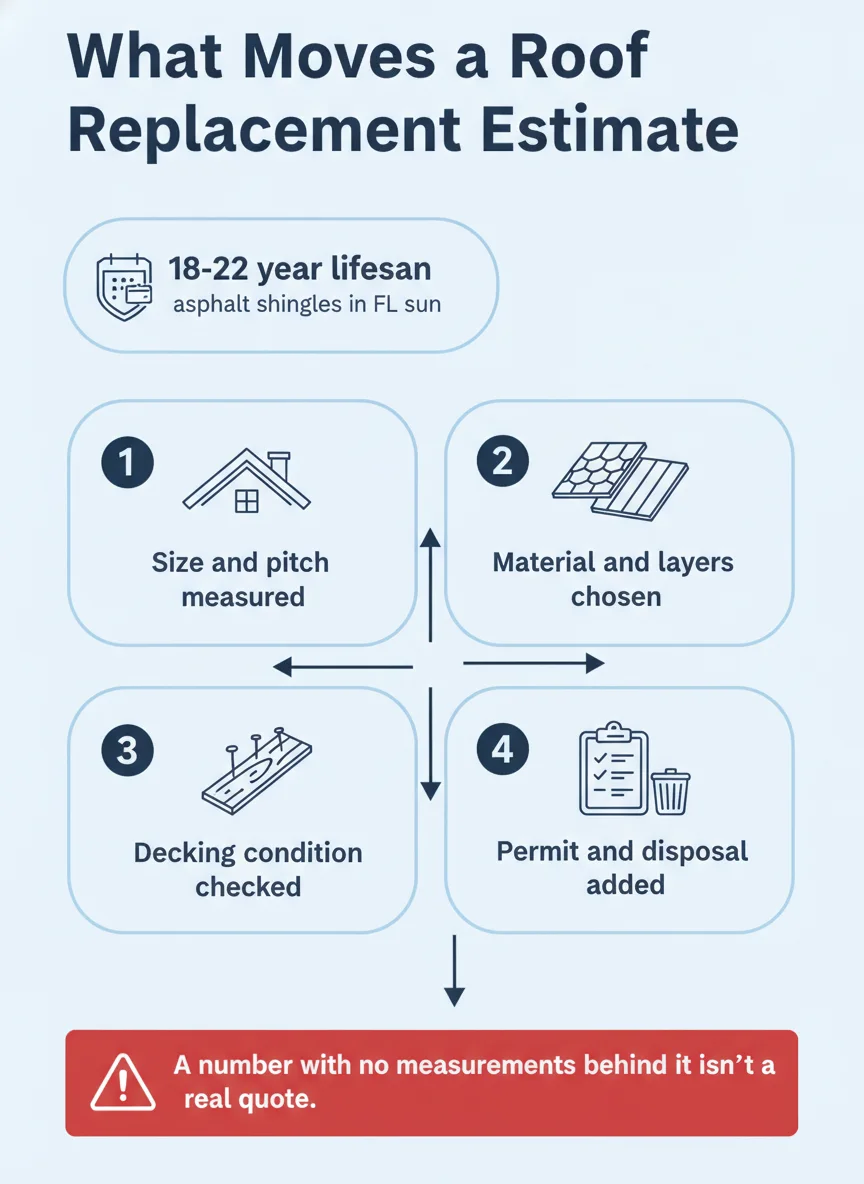
What Actually Drives the Price of a New Roof
Replacing a roof isn't a single line item, it's a stack of decisions that each carry their own cost. The size of the roof matters most obviously, but pitch, access, material, and the state of what's underneath the old covering all stack on top of that base number.
Size, Pitch, and Access
A bigger roof needs more material and more labor hours, so square footage is the starting point for any estimate. Pitch matters almost as much, a steep roof is slower and more physically demanding to work on safely, which adds labor time even if the square footage is identical to a flatter roof nearby.
Access plays a quieter role. A roof surrounded by tight side yards, mature trees, or a second story over a finished patio takes longer to stage material for and clean up after, and that shows up in the final number even though it has nothing to do with the roof itself.
Material Choice and Layers
Asphalt shingles remain the most common and typically most budget-friendly option for Florida homes, with architectural shingles sitting above basic three-tab in both price and expected performance. Metal and tile sit higher on the cost scale, metal for the material and specialized install labor, tile for the material weight and the structural work it sometimes requires.
How many layers are already on the roof matters too. A single tear-off is a cleaner, faster job than stripping two layers of old shingles down to bare decking, and most contractors price tear-off and disposal separately from the install itself.
| Material | Typical cost position | Common reason homeowners choose it |
|---|---|---|
| Asphalt shingles | Lower to mid | Budget-friendly, wide style and color range |
| Metal | Mid to higher | Longevity and a different look |
| Concrete or clay tile | Higher | Durability and a Mediterranean or coastal look |
| TPO (low-slope/commercial) | Varies by scope | Common on flat or low-pitch sections |
What's Actually Underneath Your Current Roof
Everything you see from the ground is the top layer. Underneath it sits the decking, the wood sheathing that the shingles, tile, or metal actually attach to, and underlayment, the water-resistant barrier between the decking and the covering material. Both matter more to the final cost than most homeowners realize until a crew pulls the old roof off.
If decking has taken on moisture over the years, it can be soft or delaminated in spots, and that section needs to be cut out and replaced before new material goes down. A roofer can't always see this from the ground or even from a ladder, which is one reason a firm number sometimes shifts once tear-off starts.
Step-by-Step: How a Roof Replacement Quote Gets Built
A thorough quote isn't a guess, it's built from a series of checks a roofer walks through on your property before any number gets written down.
- Roof measured: The roofer measures total square footage and pitch, either by walking the roof or using satellite and aerial measurement tools, to get an accurate base number.
- Material selected: You choose shingle, metal, or tile, and within that category, a grade or style, which sets the material cost portion of the estimate.
- Layers and decking assessed: The roofer checks how many layers already exist and looks for visible signs of decking trouble like soft spots or sagging.
- Access and features noted: Chimneys, skylights, valleys, and tight access points all get flagged since each adds labor time.
- Permit and disposal priced: Local permitting and tear-off disposal costs get folded into the total rather than left as a surprise later.
- Written estimate delivered: You receive a breakdown you can compare against other quotes line by line, not just a single bottom-line number.
How to Read a Quote Once You Have One
What a Thorough Quote Includes
A detailed quote spells out material brand and grade, whether tear-off and disposal are included, what the workmanship warranty covers, and roughly how long the job is expected to take. It should also note any decking repair as a separate line so you know what's included in the base price versus what could come up once the old roof is off.
If a quote is just one number with no breakdown, it's worth asking the contractor to walk you through what's in it. A roofer who's confident in their pricing will usually welcome the question rather than brush past it.
Red Flags Worth Asking About
A bid that's dramatically lower than every other quote you've gotten is worth a second look, not automatic excitement. It can mean lighter-grade materials, a shorter warranty, or work that skips decking repair entirely, costs that often resurface later as a separate bill or an early leak.
On the other end, a bid that's unusually high with no explanation deserves the same scrutiny. Either way, the goal is matching scope to scope, not just comparing totals.
What a Homeowner Can Handle vs. What Needs a Licensed Roofer
There are a few things a homeowner can reasonably do before calling anyone. Walking the perimeter of the house to look for granules in the gutters, checking the attic for daylight or water stains, and photographing anything that looks off are all useful steps that help a roofer understand your situation faster.
Everything past that belongs to a licensed roofer. Climbing onto a steep roof, diagnosing decking condition, and pulling permits all carry real risk and, in Florida, typically require licensing to do legally and safely. This isn't a trade where a confident guess from the ground is a substitute for someone trained to assess it up close.
A full roof replacement is also a structural project, not a cosmetic one. Mistakes in underlayment, flashing, or ventilation during install can cause problems that don't show up for years, which is part of why workmanship warranties matter so much when you're comparing contractors, something covered in more detail in our warranty comparison guide.
Getting a Number You Can Actually Trust
The most reliable way to get an accurate cost is to have a roofer actually look at your property rather than quoting off a phone description. Square footage, pitch, decking condition, and the material you choose all combine into a number that's specific to your house, not a regional average pulled off the internet.
If you're weighing residential roofing options anywhere from Lakeland to Tampa to Orlando, getting a detailed, walked-through estimate is worth the time it takes. Quality Plus Roofing & Solar has handled residential and commercial roof replacements across Florida for 22 years and backs every job with a lifetime workmanship warranty, so you know exactly what you're getting before any tear-off starts.
Frequently asked questions
What makes one roof replacement cost more than another?
Size, pitch, material choice, and the condition of the decking underneath all move the price. A steep roof with multiple layers to tear off and rotted decking to replace will always cost more than a simple, single-layer tear-off on a low-slope home.
Is metal roofing more expensive than shingles?
Generally yes, metal costs more upfront than asphalt shingles, but it often lasts longer and can hold up differently in Florida's sun and wind. The right choice depends on how long you plan to stay in the home and what you want from the warranty.
Does tile cost more to replace than shingles?
Yes, tile (clay or concrete) is typically a bigger investment than asphalt shingles because of the material itself and the labor it takes to install it correctly. It's a common choice in Florida for its look and durability, but it's not a budget option.
Why do roofing quotes vary so much for the same house?
Quotes vary because contractors differ in what they include, material brand and grade, warranty length, and how thorough the tear-off and prep work is. A lower number sometimes means less decking repair or a shorter warranty, so it pays to compare scope, not just the total.
Can I get financing for a roof replacement?
Many roofing companies, including [Quality Plus Roofing & Solar](/services/residential-roofing), offer financing options for qualified homeowners so the cost isn't one lump payment. Ask what terms and qualification process a contractor uses before you sign anything.