
Why Roof Warranty Fine Print Matters in Central Florida
A new roof in Central Florida typically arrives with paperwork from at least two different sources: the shingle or tile manufacturer and the contractor who installed it. Homeowners sign a stack of documents at closing and rarely look at them again until something leaks years later. At that point, the difference between a material warranty and a workmanship warranty determines who actually pays to fix it.
Sun exposure and seasonal storms put real wear on a roof here, which means warranty claims come up more often than in milder climates. Knowing which warranty covers which failure before you need it saves a frustrating phone call later, and it's worth understanding the differences whether you're buying Residential Roofing or reviewing coverage on a home you already own in Lakeland.
What Actually Separates the Warranty Types
Three warranty categories typically stack on a new roof, each issued by a different party and each covering a different kind of failure. Understanding who stands behind each one is the first step to reading the paperwork correctly instead of assuming it's all one blanket guarantee.
Manufacturer Material Warranties
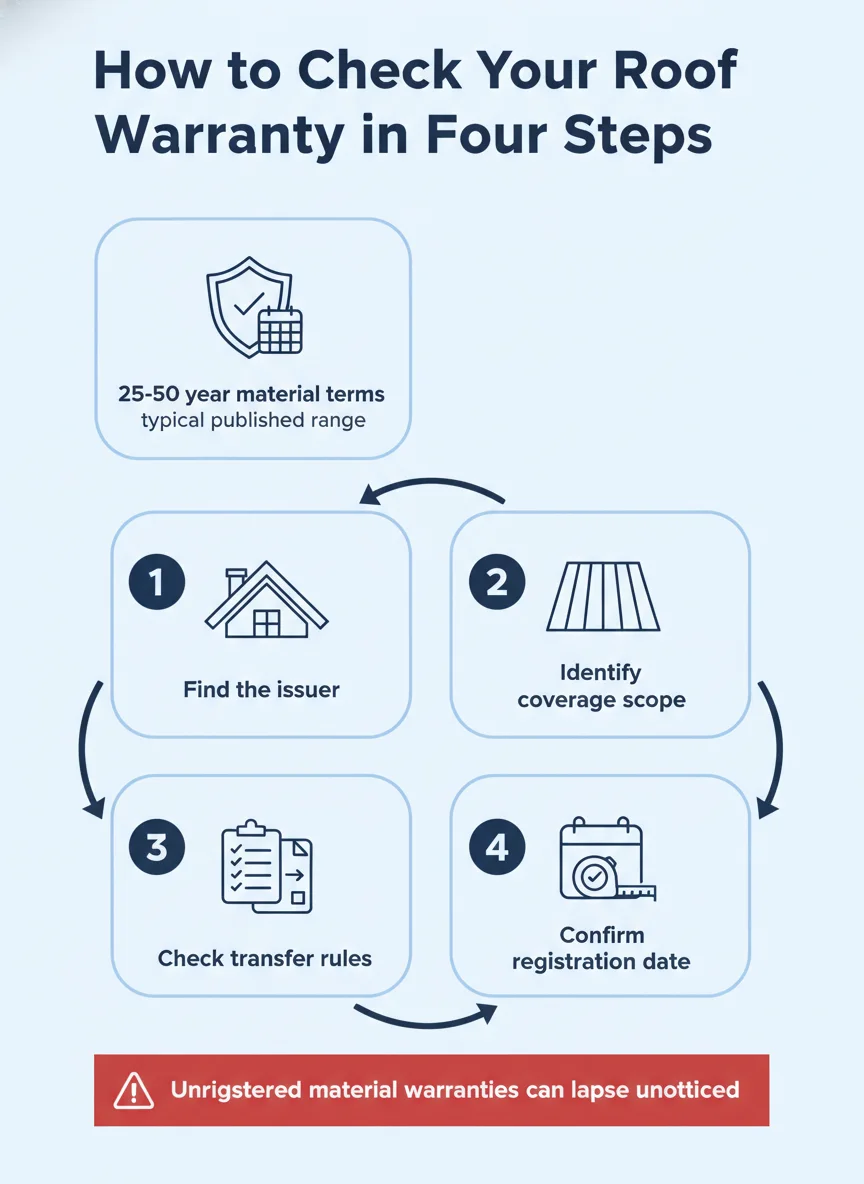
The material manufacturer, whether that's the shingle maker, the metal panel producer, or the tile manufacturer, issues a warranty covering defects in the product itself. This is the warranty that applies if a batch of shingles granulates early or a panel coating fails ahead of schedule. Manufacturers publish terms that commonly range from 25 to 50 years on the material itself, though coverage often steps down in value over time.
Material warranties do not cover labor to remove and replace the defective product in most base-level plans. Some manufacturers offer an enhanced tier that adds labor coverage, but that tier usually requires the installing contractor to carry a specific certification. Read which tier your paperwork names before assuming labor is included.
Workmanship Warranties
A workmanship warranty is issued by the roofing contractor, not the manufacturer, and it covers mistakes made during installation. That includes things like improperly sealed flashing, missed fasteners, or a valley that wasn't lapped correctly. This is the warranty most directly tied to the crew that was on your roof, and its length varies by company rather than by any industry standard.
Because a workmanship warranty is a promise from the contractor rather than a product manufacturer, its value depends heavily on whether that company stays in business and stands behind its word. A longer workmanship term, like a lifetime workmanship warranty, is worth more from a company with a long operating history than from a crew that just started taking jobs last season.
| Warranty Type | Who Issues It | What It Typically Covers |
|---|---|---|
| Manufacturer material warranty | Shingle, tile, or metal maker | Defects in the product itself, not installation errors |
| Workmanship warranty | Installing roofing contractor | Installation mistakes like flashing, fasteners, and sealing |
| Extended/enhanced warranty | Manufacturer, with certified installer | Combined material and labor coverage, often with longer terms |
What Each Warranty Actually Touches on the Roof
A material warranty follows the product, which means it covers the shingles, tiles, or panels themselves along with any manufacturer-branded accessories installed as part of a certified system, like starter strips or ridge caps from the same line. It generally does not extend to flashing, underlayment from a different brand, or vents unless those parts came from the same manufacturer and were listed in the warranty registration.
A workmanship warranty covers the install details a homeowner can't see once the job is finished: how flashing was tied into walls and chimneys, how fasteners were driven, and how penetrations for vents or Solar Systems mounts were sealed. These are the details most likely to cause a leak years down the line, which is why this warranty matters as much as the material coverage, sometimes more.
Step-by-step: How to Read Your Roof Warranty Before You Sign
Before signing off on a new roof, walk through the warranty paperwork in this order so nothing gets missed in the stack of documents handed over at the end of a job.
- Identify each issuer: Separate the manufacturer's material warranty from the contractor's workmanship warranty, since they're almost always two different documents with two different phone numbers to call.
- Check the coverage scope: Read exactly what's covered, labor only, material only, or both, and note any dollar caps or step-down schedules that reduce coverage value over time.
- Find the term length: Confirm whether the stated term is for the full material, a prorated portion, or just the workmanship, since 'lifetime' can mean different things on different lines of the same document.
- Review transfer rules: Look for a transfer window and any fee required to pass the warranty to a future buyer, which matters if you plan to sell within the coverage period.
- Note the exclusions list: Read what voids coverage, including unlicensed repairs, improper ventilation, or unapproved roof penetrations added after installation.
- Confirm registration steps: Many enhanced manufacturer warranties require registration within a set window after installation, and missing that deadline can downgrade or void the extended tier entirely.
- Save the paperwork: Keep copies of the signed warranty, the invoice, and any registration confirmation somewhere accessible, since a future claim will ask for all three.
What Homeowners Find When They Finally Read the Fine Print
The Gaps Nobody Mentioned at Closing
The most common surprise is realizing the material warranty never covered labor in the first place, so a defective batch of shingles means free replacement product but an out-of-pocket labor bill to install it. Another frequent gap is discovering the workmanship warranty only lasts a fraction as long as the material warranty, leaving years of exposure to installation-related leaks with no coverage at all.
Step-down schedules catch people off guard too. A material warranty advertised as 50 years might only pay full value for the first decade, then prorate the remaining coverage based on the roof's age at the time of the claim. None of this is hidden exactly, but it's written in language that assumes the reader already understands insurance-style terms.
What a Clean Warranty Package Looks Like
A well-documented warranty package names the manufacturer's product line specifically, states the term length in plain years without vague qualifiers, and spells out exactly what voids coverage. It also comes with a registration confirmation, not just a verbal promise that registration happened.
A clean package pairs that manufacturer documentation with a workmanship warranty from the contractor stated in writing, with a term length that matches or exceeds the contractor's years operating in the area. That pairing is what actually protects a homeowner, not just one half of the stack.
DIY Research vs. Calling a Pro to Review Your Warranty
A homeowner can absolutely read through existing warranty paperwork and flag basic questions on their own, such as confirming the term length, the issuer's contact information, and whether a transfer clause exists. This kind of document review doesn't require a license, just patience and a willingness to read the exclusions section twice.
Where a licensed roofing contractor adds real value is interpreting how a specific repair or modification interacts with the warranty's voiding clauses. Adding a vent, mounting equipment, or patching a section incorrectly can quietly void coverage, and a contractor familiar with manufacturer requirements knows which installation methods preserve the warranty and which ones don't.
It's also worth having a roofing professional confirm registration actually went through, since this step sometimes falls through the cracks between the manufacturer's online portal and the contractor's paperwork. A quick phone call to verify is far cheaper than discovering a lapsed registration during an actual claim.
Choosing a Roof Warranty That Actually Protects You
The strongest protection comes from pairing a well-documented manufacturer material warranty with a workmanship warranty from a contractor who has been doing this work long enough to stand behind it. Read the term length, the exclusions, and the transfer rules before signing anything, and keep every piece of paperwork together in one place.
If you're comparing warranty language on a quote right now and want a second opinion on what's actually covered, read Manufacturer Warranty vs. Workmanship Warranty for a closer breakdown of each document, or reach out to Quality Plus Roofing & Solar with the paperwork in hand.
Frequently asked questions
What's the difference between a manufacturer warranty and a workmanship warranty?
A manufacturer warranty covers defects in the material itself, like a shingle that fails prematurely from a factory flaw. A workmanship warranty, issued by the installing contractor, covers mistakes made during installation, such as a flashing detail that was never sealed correctly. They protect against two completely different kinds of failure.
Can a roof warranty be transferred to a new homeowner?
Many material and workmanship warranties allow one transfer to a new owner, but the rules and any transfer window vary by issuer. Check the original paperwork or ask the installing contractor before you list the home for sale, since missing a deadline can forfeit the transfer option.
Does a lifetime roof warranty mean the roof lasts forever?
No, 'lifetime' in a warranty almost always refers to the expected service life of the material or the workmanship guarantee, not a literal forever claim. Read the definition section of the document, since manufacturers and contractors each define 'lifetime' differently.
What voids a roof warranty?
The most common triggers are unlicensed repairs, unapproved roof-mounted equipment like satellite dishes or solar without proper flashing, and skipping required registration within the issuer's deadline. Each warranty document lists its own exclusions, so that section is worth reading closely before you ignore it.
Is an extended roof warranty worth paying for?
It depends on what the extended coverage adds that the base material and workmanship warranties don't already provide, such as labor to remove and replace defective material rather than just the material cost. Compare the extended terms line by line against the standard coverage before deciding.