
What Sets Lakeland's Roofing Conditions Apart
Lakeland sits inland in Central Florida, which means homes here deal with less coastal salt exposure than towns near the Gulf, but they still get the region's full share of intense sun and humidity. A roof over a Lakeland home spends most of the year absorbing direct UV exposure, and that steady heat is one of the biggest factors in how fast shingles age.
Homeowners across Lakeland often notice roof issues show up gradually rather than all at once. A little granule loss here, a slightly warmer attic there, and before long the roof that looked fine from the driveway needs a much closer look. Understanding what to watch for helps you plan a replacement or repair before it becomes an emergency.
Why Heat and Humidity Wear a Roof Down Faster
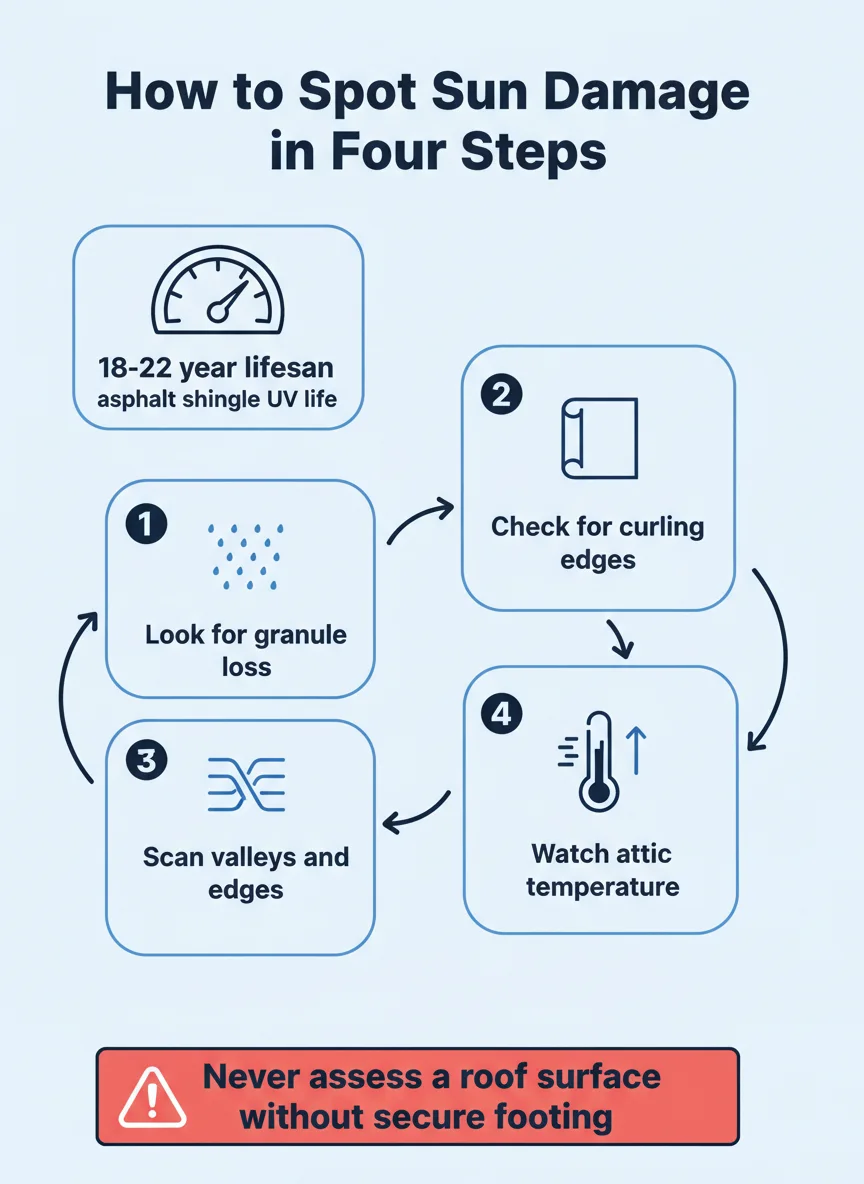
Asphalt shingles are built with a protective granule layer that reflects UV rays and shields the asphalt underneath from breaking down. In a climate like Lakeland's, that granule layer takes a steady beating almost every day of the year, which is why industry lifespan estimates for shingles in Florida sun typically land around 18 to 22 years rather than the longer ranges seen in milder climates.
How UV Exposure Shows Up Over Time
The first sign of UV wear is usually granule loss, visible as bald patches on the shingle surface or as grit collecting in gutters. Underneath that, the asphalt itself becomes more brittle, and brittle shingles crack more easily under thermal movement or foot traffic.
Once cracking starts, water finds its way underneath the shingle layer even without a storm to drive it. That's why a roof that looks fine from the ground can still be letting moisture in around cracked or curling shingles.
How Humidity Adds to the Problem
Humidity keeps moisture in the air even when it isn't actively raining, and that moisture works its way into any gap the sun has already created. Combined with a poorly ventilated attic, humidity can sit against the underside of the decking and slowly weaken it from below.
This is part of why ventilation matters so much for Lakeland homes specifically. A roof that's shedding water fine on the surface can still be losing structural integrity underneath if the attic isn't moving air the way it should.
| Roof Age | What You'll Typically See | Recommended Action |
|---|---|---|
| 0-8 years | Minimal wear, occasional debris buildup | Routine gutter and flashing checks |
| 9-15 years | Some granule loss, minor curling | Targeted repairs and closer inspection |
| 16-22+ years | Widespread wear, multiple weak points | Full replacement evaluation |
The Materials Lakeland Homeowners Choose Between
Quality Plus Roofing & Solar installs shingle, tile, metal, and TPO for residential and commercial roofs across Central Florida, using materials from manufacturers including Owens Corning, GAF, Tamko, Eagle, New Point, and Westlake. Each material handles Lakeland's heat and humidity a little differently, and the right pick usually depends on your budget, roof pitch, and how long you plan to stay in the home.
Every install comes backed by a lifetime workmanship warranty, which matters more in a climate that puts steady, year-round stress on a roof rather than occasional seasonal wear. For a deeper comparison of materials, see Tile vs. Shingle vs. Metal in Hurricane Country.
Step-by-step: Checking a Lakeland Roof for Sun Wear
You can do most of this check from the ground with a pair of binoculars and a look through your attic hatch.
- Look at gutters: Check for granule buildup in the gutters, which is one of the earliest signs that shingles are losing their protective coating.
- Scan roof edges: Look at the edges and ridge lines for curling or lifted shingles, which show up first where sun exposure is most direct.
- Check the attic: Feel whether the attic runs noticeably hotter than the rest of the house, which can point to a ventilation issue.
- Look for daylight: Check the attic decking for any visible light coming through, a sign the roof surface has a gap somewhere.
- Note discoloration: Look for dark streaking or discoloration on the roof surface, which can indicate trapped moisture or organic growth.
What a Closer Look Usually Turns Up
On Older Shingle Roofs
Roofs past the 15 year mark in Lakeland's sun often show a mix of granule loss, minor curling, and small cracks that haven't yet become active leaks. Individually these look manageable, but together they usually mean the roof's protective layer is nearing the end of its useful life.
At this stage, a residential roofing evaluation can tell you whether targeted repairs will realistically hold for a few more years or whether it's more cost-effective to plan a full replacement before a bigger failure happens.
On Newer Roofs with Ventilation Issues
Even a newer roof can show premature wear if the attic wasn't properly vented during installation. Signs include a consistently hot attic, moisture on the underside of the decking, or shingles aging faster than expected for their installation date.
Catching a ventilation issue early is one of the more cost-effective fixes available, since it protects the rest of the roof system from wearing out ahead of schedule.
DIY vs Calling a Pro for a Lakeland Roof
Clearing gutters, checking your attic for heat and moisture, and doing a ground-level visual scan are all reasonable for a homeowner to handle on their own. These give you a good early read without requiring you to get on the roof surface.
Anything involving climbing onto the roof, replacing shingles, or evaluating structural decking should go to a licensed roofer. Sun-baked shingles can be more brittle than they look, and stepping on a weak spot risks turning a minor repair into a bigger one.
If your attic check reveals consistent heat buildup, visible daylight, or moisture, that's a sign worth having a professional assess sooner rather than later. Ventilation and structural issues tend to compound the longer they go unaddressed.
Planning Ahead for a Lakeland Roof
Lakeland's heat and humidity aren't going anywhere, so planning around them, rather than reacting after a leak shows up, keeps a roof performing longer and keeps repair costs more predictable. Checking in on your roof's condition every few years puts you ahead of the wear pattern instead of behind it.
Quality Plus Roofing & Solar has served Central Florida homeowners for over 22 years and works throughout Lakeland and nearby towns like Tampa on everything from targeted repairs to full replacements.
Frequently asked questions
How does Lakeland's climate affect a residential roof?
Lakeland sees a lot of direct sun and humidity year round, and that combination speeds up wear on shingles compared to cooler, drier climates. UV exposure breaks down the protective granules on asphalt shingles, and humidity keeps moisture in play even between rain events.
How long should a residential roof last in Lakeland?
Asphalt shingle roofs in Florida's UV exposure typically run in the 18 to 22 year range industry wide, though ventilation and installation quality shift that number in either direction. A roof with poor attic airflow tends to wear out sooner than one that's properly vented.
What roofing materials hold up best in Lakeland?
Shingle, tile, and metal all perform well in Central Florida when installed correctly, and the right choice usually comes down to budget, home style, and how long you plan to own the property. Quality Plus Roofing & Solar installs all three along with TPO for flat and low-slope sections.
Do Lakeland homes need special roof ventilation?
Good attic ventilation matters more in a hot, humid climate like Lakeland's because trapped heat and moisture shorten a roof's life from underneath. A properly vented attic keeps shingles cooler and keeps decking dry, both of which extend how long the roof lasts.
When is it time to replace a residential roof in Lakeland instead of repairing it?
Replacement makes more sense once a roof is showing widespread granule loss, multiple leak points, or is approaching the end of its expected lifespan rather than one isolated issue. A licensed roofer can look at the overall condition and tell you whether a repair will realistically hold or just delay a bigger job.